
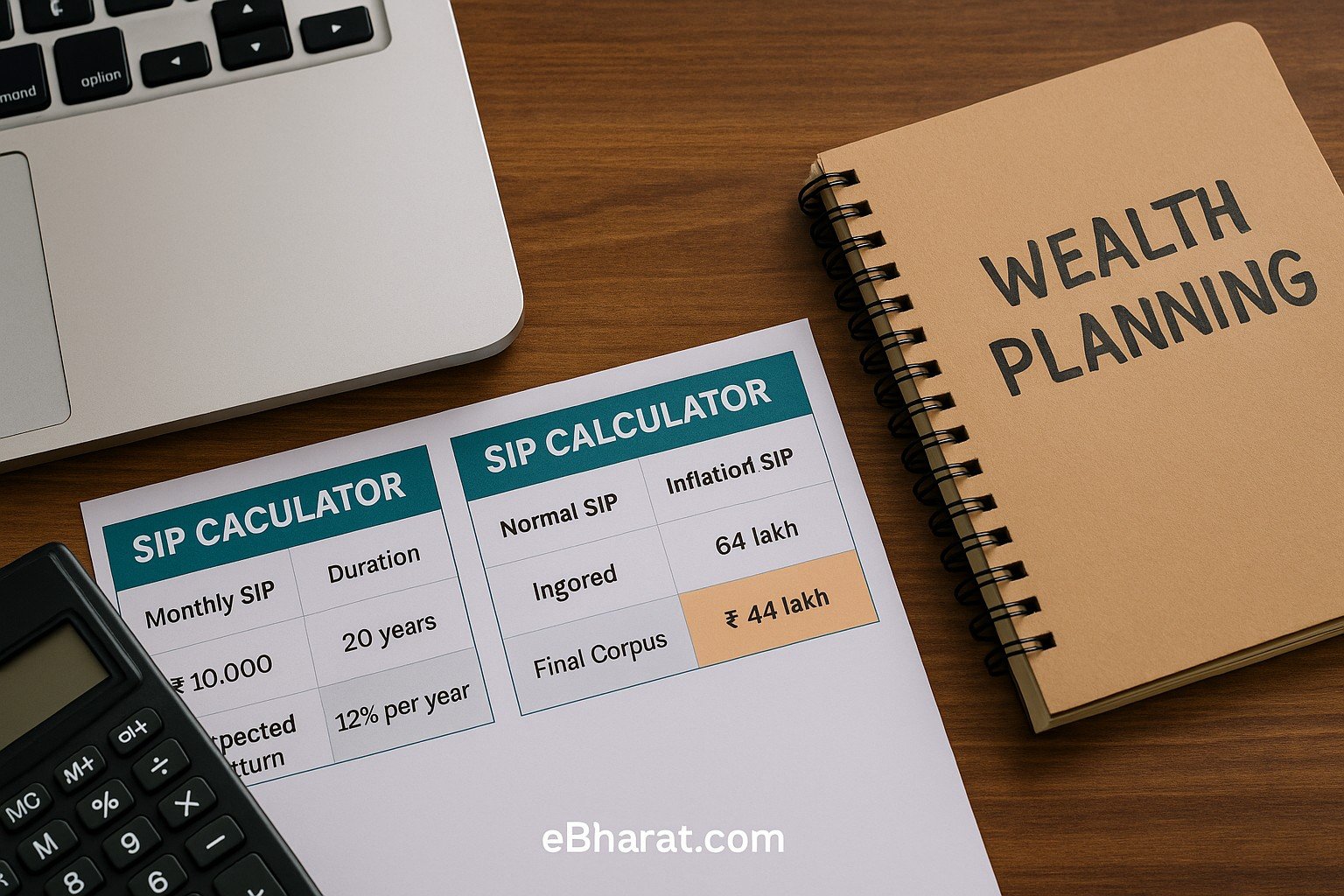
Most investors who start a Systematic Investment Plan (SIP) do so with excitement. You see figures that show impressive returns — sometimes even 12%, 15% or more annually. When you imagine what that could mean for your goals, it feels powerful and motivating.
But when it comes time to withdraw or assess your real-life purchasing power, your returns sometimes feel lower than what the numbers initially suggested. So why does this happen?
In this blog, we’ll break down the real reason behind this gap — and introduce you to a tool that helps you see realistic returns after adjusting for rising costs.
1. The Difference Between Nominal and Real Returns
When you see SIP returns quoted — say 12% per year — that’s the nominal return. It doesn’t take into account changes in the buying power of money.
But in real life, inflation erodes the value of money. ₹100 today won’t buy the same things 5 or 10 years later.
That’s where real returns come into play — returns that are adjusted for inflation.
So even if your SIP is earning 12%, if inflation is 6%, your real return is closer to 6%.
This gap is why your investment feels less rewarding when you actually use the money.
2. How Inflation Reduces Purchasing Power
Inflation measures how much prices rise over time. When inflation is high, everyday things like groceries, fuel, education, housing, utilities, and healthcare cost more each year.
For example:
- If ₹10,000 could buy a basket of goods in 2025,
- and inflation averages 6% per year,
- by 2030 the same basket might cost nearly ₹13,000.
This means even if your SIP grew from ₹10,000 to ₹18,000, your ability to buy the same goods has not increased as much as it seems.
3. Why SIP Returns Feel Lower Than They Look
Here are the key reasons:
a) Your Returns Are Quoted Before Inflation
Most SIP calculators and benchmark returns show nominal returns. They don’t consider rising prices.
b) You Plan With Today’s Money, Not Future Money
When you think “₹1 crore in 10 years,” you imagine current-day value. But in reality, that ₹1 crore will buy less in the future.
c) Emotions vs. Reality
It’s human nature to compare historical prices with present ones. When you factor in inflation, your money just doesn’t go as far as it used to.
4. The Solution: Use an Inflation Adjusted SIP Calculator
To avoid the shock of inflated expectations, it’s important to measure your expected returns after accounting for inflation.
That’s where an Inflation Adjusted SIP Calculator becomes invaluable.
👉 Try the Pocketful Inflation Adjusted SIP Calculator
This tool lets you:
- Enter your SIP amount
- Choose investment duration
- Add expected annual returns
- Input inflation rate
And it gives you real-world purchasing value of your investment — not just the nominal number.
5. How to Think of Real Returns
Let’s look at an example:
| Year | SIP Value (Nominal) | Real Value After Inflation |
|---|---|---|
| 1 | ₹1,12,000 | ₹1,05,660 |
| 5 | ₹6,50,000 | ₹5,30,000 |
| 10 | ₹15,00,000 | ₹10,50,000 |
(Numbers are illustrative only.)
This shows how inflation reduces the real buying power of what looks like high returns.
6. What This Means for Your Financial Goals
Here’s why adjusting for inflation matters:
- Retirement Planning: You must ensure your money can cover future expenses.
- Children’s Education: Inflation makes education costlier every year.
- Lifestyle Goals: Travel, buying a home, and medical expenses all go up with inflation.
By using inflation-adjusted SIP planning, you make smarter, realistic financial decisions.
7. Tips to Improve Real Returns
If your returns feel low after adjusting for inflation, you can:
Diversify Across Asset Classes
Stocks, equity funds, and hybrid assets generally outperform inflation over long periods.
Invest for the Long Term
Inflation impacts are reduced over longer horizons.
Review Your SIP Regularly
Rebalance based on goals, age, and market conditions.
Use Real Return Planning Tools
Always evaluate SIP plans with inflation factored in.
Conclusion
Your SIP returns may look impressive on paper, but when inflation is factored in, they can feel much smaller in real-life buying power. This is not a flaw in your investment — but a hidden reality of rising prices.
To truly understand how much your money will be worth in the future, you should always adjust returns for inflation using an Inflation Adjusted SIP Calculator.
This way, you plan with realistic expectations and make smarter financial decisions for your goals.
