
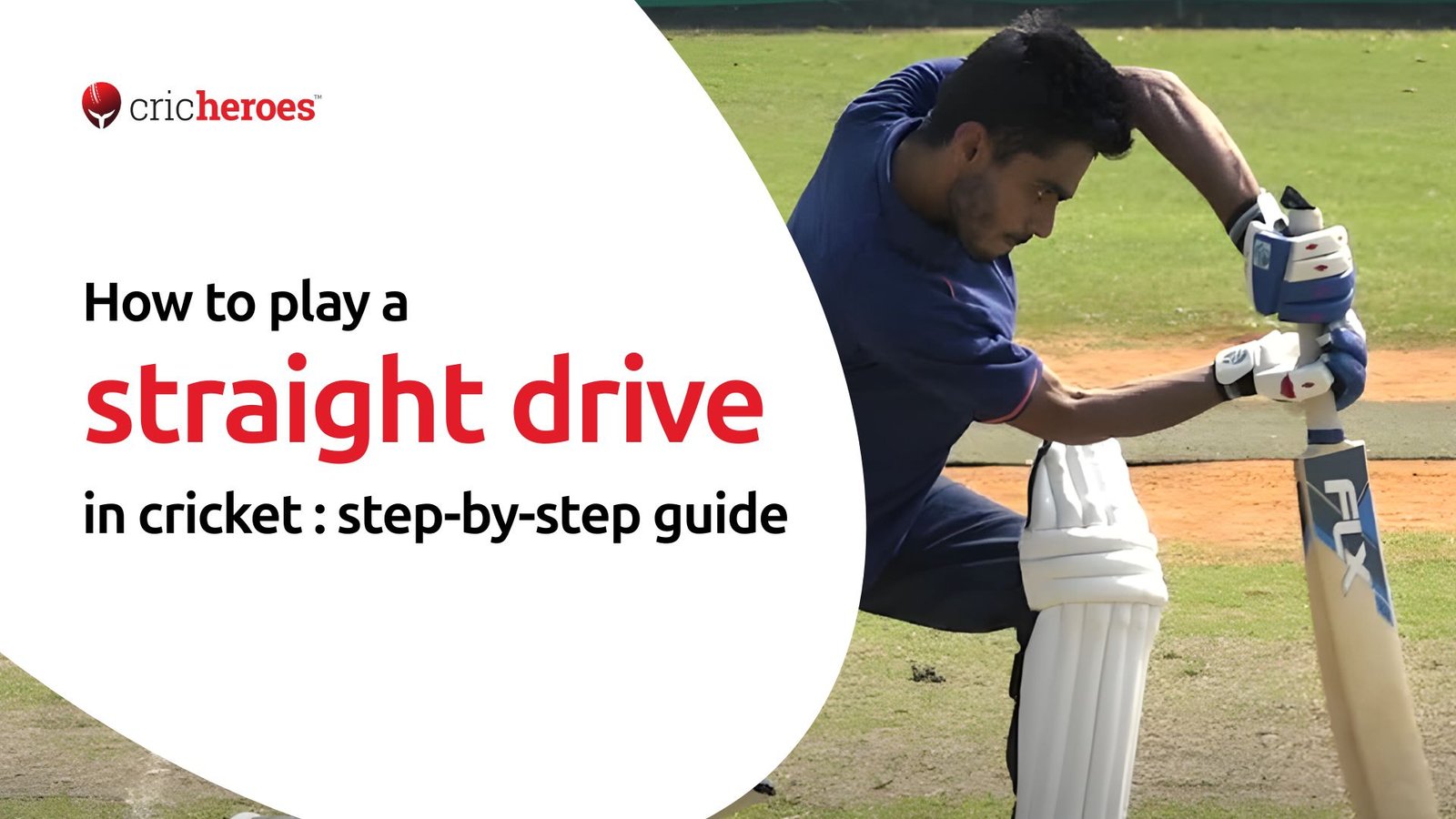
The straight drive looks easy. That is why so many batters get it wrong.
At nets and club matches, dismissals often come from one place. A mistimed drive played too early, too hard, or with poor balance. Coaches notice this pattern quickly. Players want runs before control.
The straight drive in cricket is not about flair. It is about discipline. When played correctly, it keeps you safe and settled. When played poorly, it exposes every technical weakness.
This article breaks down the most common mistakes while playing the straight drive in cricket and offers simple fixes that actually work at grassroots, club, and competitive levels. If your straight drive feels inconsistent, the reason is likely simple and fixable.
Playing the Straight Drive Without Proper Footwork
Poor footwork is the most common reason the straight drive fails.
Many batters try to play the shot without committing the front foot. They reach for the ball instead of moving to it. This creates imbalance and poor contact.
Typical footwork errors include the following.
- Front foot not moving far enough
- Stepping across the line of the ball
- Playing off the crease to a full delivery
These errors force the bat to swing away from the body.
The fix starts with intent. Commit forward early. Move your front foot toward the pitch of the ball. Even if you do not drive, the movement puts you in control. Good footwork turns risky drives into safe pushes.
Swinging Too Hard at the Ball
Many players believe power creates good straight drives. It does not.
Over-swinging causes loss of shape. The bat comes across the line. The head moves. Timing disappears.
This mistake shows up clearly at lower levels.
- Batters try to force the ball past the bowler
- Hands lead instead of the body
- Follow-through becomes uncontrolled
The fix is mental, not physical. Think placement, not distance. Let timing do the work. A relaxed swing with a straight bat sends the ball just as fast, often faster.
If you hear a loud edge or see the bat twist, you are swinging too hard.
Head Falling Over at Contact
Head position controls balance. When the head falls sideways, everything else follows.
Batters often lean away from the ball while driving. This causes mistiming and edges, especially against movement.
Signs of poor head position include:
- Eyes losing sight of the ball
- Body weight falling toward cover or midwicket
- Bat face opening at impact
The fix is simple but demanding. Keep your head directly above the front knee at contact. Focus on watching the ball hit the bat.
In coaching drills, players are often asked to freeze after playing the straight drive. If you cannot hold balance, your head moved too early.
Playing the Straight Drive Too Early
Timing is about when, not how hard.
Many batters drive before the ball reaches its full length. This often happens against faster bowlers or on bouncy pitches.
Common early-driving mistakes include:
- Playing on the up too soon
- Bat meeting the ball before it dips
- Losing control against movement
The fix is patience. Let the ball come to you. Wait that extra fraction of a second. Good straight drives are played under the eyes, not out in front.
At higher levels, this delay separates consistent batters from flashy ones.
Incorrect Bat Path
A straight drive needs a straight bat path. That sounds obvious, but many batters swing in a curve without realizing it.
An incorrect bat path causes inside edges, outside edges, or mis-hits.
This usually comes from:
- Strong bottom hand
- Closed or open bat face
- Poor grip alignment
The fix begins with grip awareness. Hold the bat so the face stays straight naturally. During practice, try slow shadow swings and watch the bat path closely.
If the bat comes down close to the pad, the path is usually correct.
Choosing the Wrong Ball to Drive
Shot selection matters as much as technique.
Not every ball deserves a straight drive. Many dismissals happen because batters drive at balls they should defend or leave.
Risky balls include:
- Over-pitched balls swinging late
- Full balls outside comfortable driving range
- Good-length deliveries that are not quite full
The fix is discipline. Ask one question before driving. Is the ball full enough?
Great batters wait. They do not feel rushed. They score from balls that invite the shot.
Poor Balance After the Shot
Balance does not end at contact. It continues after the follow-through.
If you fall forward or sideways after the shot, balance was missing earlier.
Poor balance often shows up as:
- Over-reaching
- Lunging instead of stepping
- Falling across the line
The fix is controlled movement. Step forward, plant the foot, and let the bat follow through naturally. You should be able to hold your position after the shot.
If you cannot stop yourself from falling, the shot was rushed.
Straight Drive Mistakes Against Fast Bowlers
Against pace, mistakes become more costly.
Fast bowlers test batters with movement and bounce. A poor straight drive here often leads to edges.
Common mistakes against pace include:
- Driving away from the body
- Playing with hard hands
- Committing too late with the front foot
The fix is tight technique. Keep the bat close to the pad. Play late. Respect early movement.
Many Test batters survive long spells by driving less and defending more early on.
Straight Drive Mistakes Against Spin
Against spin, the straight drive fails when batters lose patience.
Players often try to hit spinners too hard straight down the ground. This leads to lofted shots and catches.
Common errors against spin include:
- Not reaching the pitch of the ball
- Over-hitting instead of placing
- Playing with a closed bat face
The fix is commitment. Either get fully forward or stay back. When driving, reach the pitch and keep the ball along the ground.
Soft hands beat spin more often than power.
Why Beginners Struggle With the Straight Drive
Beginners struggle because the straight drive exposes flaws early.
It requires balance, patience, and coordination. These skills take time.
Beginners often:
- Focus on hitting instead of learning shape
- Copy advanced shots too soon
- Ignore basics like grip and stance
The fix is repetition with purpose. Practice slowly. Use soft balls. Focus on shape, not outcome.
The straight drive is often the first proper shot beginners learn, and the last they truly master.
Simple Practice Drills to Fix Straight Drive Errors
Fixing mistakes does not need complex drills.
Simple exercises bring real improvement.
- Shadow batting in front of a mirror
- Drop-ball drill focusing on bat path
- One-step forward drive drill
- Soft throw-downs aiming straight past the bowler
After each drill, pause and check balance. That reflection matters as much as the drill itself.
Short daily practice works better than long, unfocused sessions.
Why the Straight Drive Defines Good Batters
The straight drive reveals habits clearly.
It shows patience. It shows balance. It shows respect for the ball.
Coaches often trust batters who drive straight. They know these players defend well, leave well, and choose shots wisely.
This is why the straight drive in cricket still defines great batters across formats.
FAQ: Straight Drive in Cricket
What is the most common straight drive mistake
The most common mistake is poor footwork, especially not moving forward to the ball.
How to fix mistiming in the straight drive
Focus on watching the ball longer and playing it under your eyes.
Why do batters edge straight drives
Edges happen when the bat swings across the line or the head falls over.
Should beginners play the straight drive often
Yes, but only to full-length balls and with controlled intent.
Is power important in the straight drive
No, timing matters more than power.
Why does my straight drive go aerial
It usually happens due to over-hitting or not reaching the pitch.
Can straight drive mistakes be fixed at home
Yes, shadow batting and drop-ball drills help a lot.
Is the straight drive risky
It is low-risk when played to the right ball with correct technique.
Do pros still practice the straight drive
Yes, it remains a key part of batting drills at all levels.
Does the straight drive work in T20 cricket
Yes, especially early in the innings to manage risk.
Key Takeaways and Next Steps
Most straight drive problems come from rushing the process.
Fix the basics. Move your feet. Stay balanced. Trust timing.
The straight drive in cricket rewards patience and honesty. Practice it with care, and it improves every other part of your batting.
Watch good players closely. Practice slowly. Respect the shot.
That is how real improvement begins.
