
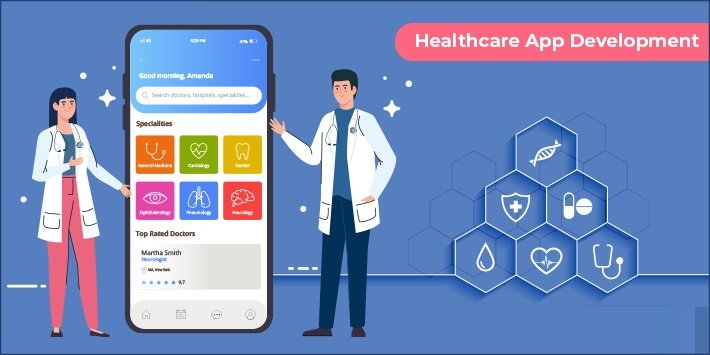
re industry is rapidly evolving with digital transformation playing a major role in improving patient care, operational efficiency, and accessibility. Mobile and web applications have become essential tools for hospitals, clinics, startups, and healthcare providers to deliver services such as telemedicine, appointment booking, patient monitoring, and electronic health records.
However, the success of any healthcare application depends heavily on the quality of the development partner you choose. Selecting the right healthcare app development company is a critical decision that impacts security, compliance, performance, and user experience.
This guide explains how to choose the right healthcare app development company for your business and what factors you should carefully evaluate before making a decision.
Understanding Healthcare App Development Services
Healthcare app development services involve designing and building digital solutions that support medical services and patient care. These applications are designed for different stakeholders such as patients, doctors, hospital staff, and administrators.
Common healthcare applications include:
- Telemedicine apps
- Patient management systems
- Electronic health record systems
- Appointment booking platforms
- Remote patient monitoring apps
- Healthcare consultation apps
A reliable development company ensures these solutions are secure, scalable, and easy to use.
Define Your Business Requirements
Before selecting a development partner, it is important to clearly define your goals. Healthcare applications vary widely based on use cases and target users.
Ask yourself:
- Are you building a patient-facing app or an internal hospital system?
- Do you need telemedicine features or remote monitoring tools?
- Will your app handle sensitive medical records?
- What level of security and compliance is required?
- What is your budget and timeline?
Clear requirements help you find a development company that aligns with your needs.
Prioritize Healthcare Industry Experience
Healthcare applications are complex and require deep understanding of medical workflows, data privacy, and compliance requirements. Choosing a company with relevant experience reduces risks and improves quality.
An experienced healthcare app development company understands:
- Patient data handling
- Medical workflows
- Appointment scheduling systems
- Doctor-patient communication models
- Healthcare regulations and standards
Industry experience ensures the final product is practical and reliable.
Check Technical Expertise
A strong healthcare application depends on advanced technical capabilities. The development company should be skilled in modern technologies and frameworks.
Key areas of expertise include:
Mobile App Development
The ability to build smooth, responsive, and user-friendly mobile applications for both Android and iOS platforms.
Backend Development
A secure and scalable backend system that manages patient data, appointments, and communication.
Cloud Infrastructure
Cloud-based systems ensure scalability, high availability, and secure data storage.
API Integration
Integration with third-party systems such as payment gateways, wearable devices, and diagnostic tools.
Data Security
Implementation of encryption, authentication, and secure data storage methods.
Technical strength is essential for building reliable healthcare applications.
Ensure Compliance with Healthcare Standards
Healthcare applications must follow strict data protection and regulatory guidelines. Security and compliance are non-negotiable factors.
A professional development company should be familiar with:
- Patient data privacy regulations
- Secure data handling practices
- Role-based access control
- Audit logs and monitoring
- Data encryption standards
Failure to follow compliance requirements can lead to legal and security issues.
Focus on User Experience
Healthcare apps are used by patients, doctors, and administrative staff. A simple and intuitive user experience is essential for adoption and engagement.
A good healthcare application should offer:
- Easy navigation
- Fast performance
- Simple appointment booking
- Clear dashboards
- Accessible design for all users
Good UX design improves satisfaction and reduces operational complexity.
Evaluate Customization Capabilities
Every healthcare business has unique requirements. A flexible development partner should offer customized solutions rather than one-size-fits-all products.
Customization may include:
- Patient-specific dashboards
- Doctor scheduling systems
- Multi-hospital support
- Integration with medical devices
- Personalized treatment tracking
Custom solutions ensure better alignment with your operational needs.
Consider Scalability
Healthcare applications often start small but expand as user demand increases. Scalability ensures your system can handle growth without performance issues.
A scalable healthcare application should support:
- Increasing patient numbers
- More healthcare providers
- Additional features and modules
- Higher data storage requirements
Choosing a scalable solution prevents costly redevelopment in the future.
Review Development Process
A structured development process is important for timely and successful delivery.
A typical process includes:
- Requirement analysis
- System design
- UI/UX development
- Application development
- Testing and quality assurance
- Deployment
- Maintenance and support
A clear process ensures transparency and better project management.
Check Security Measures
Healthcare apps handle sensitive patient information, making security a top priority.
Key security features include:
- Secure login systems
- Data encryption
- Multi-factor authentication
- Role-based access control
- Regular security updates
- Threat monitoring systems
Strong security builds trust and protects patient data.
Evaluate Maintenance and Support
Launching the application is just the beginning. Ongoing maintenance ensures smooth performance and system reliability.
Support services should include:
- Bug fixes
- Feature updates
- Security patches
- Performance optimization
- Technical support
A reliable support system ensures long-term success.
Analyze Communication and Collaboration
Good communication is essential for successful project delivery. A professional development company should maintain transparency throughout the process.
Look for:
- Regular progress updates
- Clear documentation
- Dedicated project management
- Quick response to queries
Effective communication reduces misunderstandings and delays.
Check Portfolio and Reviews
Reviewing past work helps you understand the company’s capabilities and expertise.
Focus on:
- Previous healthcare projects
- UI/UX quality
- Feature complexity
- Client feedback
- Industry relevance
A strong portfolio reflects reliability and experience.
Compare Cost and Value
Cost is important, but it should not be the only deciding factor. Focus on overall value rather than just price.
Consider:
- Features offered
- Quality of development
- Security standards
- Scalability options
- Support services
Investing in quality development ensures better long-term returns.
Future Trends in Healthcare App Development
Healthcare technology is evolving rapidly. Choosing a forward-thinking development company helps you stay competitive.
Emerging trends include:
Artificial Intelligence
AI helps in diagnosis support, predictive analytics, and personalized care.
Telemedicine Expansion
Remote consultations are becoming more common and widely accepted.
Wearable Integration
Apps now connect with health monitoring devices for real-time data tracking.
Data-Driven Healthcare
Advanced analytics improve decision-making and patient outcomes.
Automation
Automation improves efficiency in scheduling, reporting, and patient management.
Conclusion
Choosing the right healthcare app development company is a crucial decision that directly impacts the success of your digital healthcare solution. A reliable partner should offer strong technical expertise, healthcare industry knowledge, security compliance, scalability, and ongoing support.
By carefully evaluating requirements, experience, security standards, and communication practices, businesses can select a development company that aligns with their goals. A well-developed healthcare application not only improves operational efficiency but also enhances patient care and satisfaction in the long run.
