
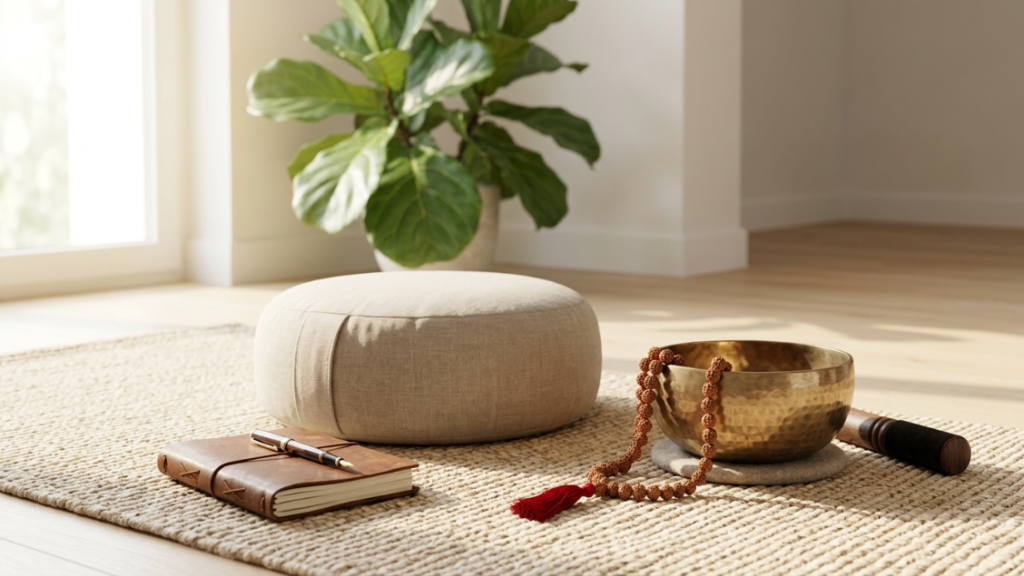
Starting a meditation practice can feel intimidating without the right tools, but the truth is that very few accessories are actually essential. The most useful mindfulness accessories tend to support consistency and comfort rather than adding complexity to the practice itself.
A comfortable cushion or mat is usually the first investment worth making. Sitting posture has a direct impact on how long and how comfortably someone can meditate, and an unsupportive setup is one of the most common reasons beginners abandon the habit early. A cushion that elevates the hips slightly above the knees, for example, makes it considerably easier to maintain a straight spine without strain, which in turn makes longer sessions far more sustainable.
Beyond comfort, certain tools like beads or small handheld objects give the hands something tactile to focus on, which can be particularly helpful for people who find stillness difficult at first. This is especially useful for beginners who feel restless or fidgety during early sessions, since a tactile object provides a small, contained outlet for that energy without becoming a major distraction.
Sound-based tools also play an underrated role. A small bell or chime can mark the beginning and end of a session, creating a clear psychological boundary around practice time. This kind of ritual marker often matters more than people expect, especially for beginners trying to build a sustainable habit, since it removes the ambiguity of deciding when a session has truly started or finished.
Portability is worth considering as well. Many beginners meditate inconsistently simply because their tools aren’t accessible — a cushion left in a closet or a candle that requires setup discourages spontaneous practice. Choosing accessories that can live visibly in a regularly used space increases the likelihood of actually using them, and reduces the friction between intention and action.
Exploring a curated range of mindfulness accessories is a practical way to identify which tools genuinely fit a personal routine, rather than guessing based on what looks appealing in isolation.
For anyone building a practice from the ground up, ShaolinMart organizes its accessory collection specifically around these everyday use cases, making it easier to assemble a small, functional toolkit rather than an overwhelming one.
Building a routine around these accessories matters as much as choosing the right ones. Keeping a cushion in the same visible spot, rather than storing it away after each use, removes a small but meaningful barrier to consistency. Many beginners who struggle to maintain a regular practice find that the issue isn’t motivation but friction — every extra step between deciding to meditate and actually sitting down reduces the likelihood that the session happens at all. Treating accessories as permanent fixtures in a space, rather than items to set up and put away each time, often makes the biggest practical difference over the first few months of a new practice.
Seasonal adjustments are worth considering too — a cushion that feels perfectly comfortable in summer might need a thicker mat or an added layer underneath during colder months, simply because cold floors can make extended sitting noticeably less pleasant. Beginners who treat their setup as something to revisit and adjust occasionally, rather than a fixed one-time purchase, tend to stick with their practice longer than those who buy once and never reconsider whether their tools still suit their evolving routine.
FAQ
Do I need expensive accessories to meditate effectively? No, a basic cushion and a quiet space are sufficient; accessories simply support consistency and comfort.
What’s the most beginner-friendly accessory? A comfortable cushion or mat is typically the highest-impact first purchase.
Are beads only for counting prayers? While traditionally used for counting recitations, many people use beads simply as a tactile focus tool during meditation.
How many accessories should a beginner start with? One or two — typically a cushion and a single tactile or sound tool — is enough to start without overwhelming a new routine.
Should meditation accessories be stored away after each use? Many practitioners find that keeping accessories visible and ready reduces friction and makes consistent practice more likely.
