
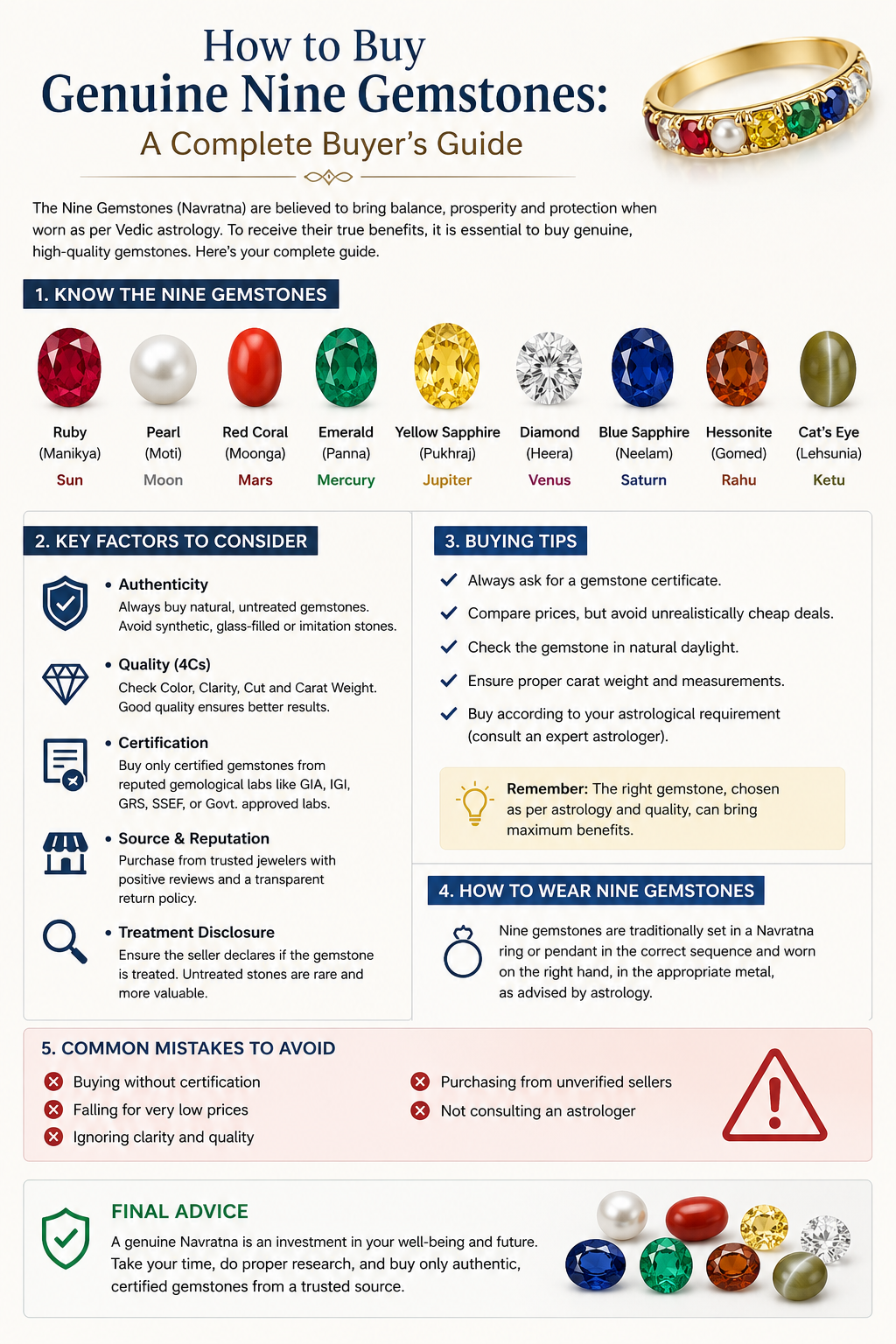
Purchasing gemstones for astrological purposes is often considered a significant investment, both financially and spiritually. Among the most sought-after combinations is the Navratna, also known as the Nine Gemstones, which represents the energies of the nine celestial bodies in Vedic astrology. However, with the increasing availability of synthetic stones, treated gems, and misleading certifications, buying genuine nine gemstones has become more challenging than ever.
Whether you are purchasing individual gemstones or a Navratna ring, pendant, or bracelet, understanding how to identify authentic gemstones is essential. This guide explains the key factors to consider before investing in genuine nine gemstones.
What Are the Nine Gemstones?
The Navratna consists of nine gemstones associated with the nine planets in Vedic astrology.
- Ruby gemstone – Sun
- Pearl – Moon
- Red Coral – Mars
- Emerald – Mercury
- Yellow Sapphire – Jupiter
- Diamond – Venus
- Blue Sapphire – Saturn
- Hessonite (Gomed) – Rahu
- Cat’s Eye – Ketu
Each gemstone is believed to strengthen the influence of its corresponding planet and promote harmony, prosperity, and well-being.
1. Understand the Difference Between Natural, Treated, and Synthetic Gemstones
One of the biggest mistakes buyers make is assuming all gemstones available in the market are natural.
Natural Gemstones
These gemstones are formed naturally within the earth over millions of years and are generally preferred for astrological purposes.
Treated Gemstones
Many gemstones undergo treatments such as heating, dyeing, fracture filling, or coating to improve their appearance. While treated gemstones may look attractive, they are often considered less desirable for astrological use.
Synthetic Gemstones
Synthetic stones are created in laboratories and mimic the appearance of natural gems. They are usually more affordable but do not possess the rarity or market value of natural stones.
For astrological benefits, most astrologers recommend untreated and natural gemstones.
2. Always Ask for a Gemstone Certification
Certification is one of the most important factors when purchasing genuine gemstones.
A gemstone certificate should include details such as:
- Gemstone name
- Natural or synthetic origin
- Weight in carats
- Color description
- Shape and cut
- Treatments, if any
- Laboratory details
Before purchasing, ensure that the certificate comes from a recognized gemological laboratory and matches the gemstone being sold.
3. Buy From a Reputable Gemstone Dealer
With thousands of gemstone sellers operating both online and offline, choosing a trusted dealer is crucial.
Look for dealers who provide:
- Transparent pricing
- Treatment disclosures
- Laboratory certificates
- Clear return policies
- Customer reviews and testimonials
- Expert guidance for astrological gemstones
Established gemstone businesses usually prioritize customer education and authenticity over aggressive sales tactics.
4. Learn Basic Quality Factors
Every gemstone should be evaluated based on four important characteristics.
Color
Color significantly impacts the value of a gemstone. High-quality gemstones typically exhibit rich and evenly distributed colors.
Clarity
Natural gemstones often contain inclusions. However, excessive cracks, cloudiness, or visible damage may affect the stone’s beauty and durability.
Cut
A well-cut gemstone enhances brilliance and overall appearance. Poor cutting can reduce its visual appeal.
Carat Weight
Larger gemstones generally command higher prices, especially when they possess excellent color and clarity.
Understanding these quality parameters can help buyers make informed decisions.
5. Verify Treatment Disclosures
Many gemstones commonly used in Navratna jewelry are treated to improve their appearance.
Examples include:
- Heated Yellow Sapphires
- Fracture-filled Rubies
- Oiled Emeralds
- Enhanced Diamonds
Ask the seller specific questions regarding treatments. Reputable dealers openly disclose any enhancements made to the gemstone.
6. Inspect the Gemstone Personally Whenever Possible
If purchasing from a physical store, examine the gemstone carefully.
Check for:
- Surface scratches
- Uneven coloration
- Excessive inclusions
- Chips or fractures
- Artificial-looking transparency
When buying online, request high-resolution photographs and videos taken under natural lighting conditions.
7. Be Cautious of Unrealistically Low Prices
Natural gemstones are rare, and high-quality specimens often command premium prices.
If a seller offers gemstones at prices significantly lower than prevailing market rates, proceed with caution.
Extremely cheap gemstones may indicate:
- Synthetic origin
- Heavy treatments
- Misrepresentation
- Poor quality material
Price alone should never be the deciding factor when buying gemstones intended for long-term wear or astrological use.
8. Seek Astrological Guidance Before Purchasing
Although Navratna jewelry is generally considered suitable for most individuals, some people prefer wearing specific gemstones based on their birth charts.
Consulting an experienced astrologer can help determine:
- Appropriate gemstone combinations
- Recommended gemstone weights
- Suitable metals for setting
- Wearing procedures and auspicious timings
This personalized approach can provide additional confidence before making a purchase.
Final Thoughts
Buying genuine nine gemstones requires careful research, patience, and attention to detail. By understanding gemstone quality, insisting on laboratory certification, verifying treatment disclosures, and purchasing from reputable dealers, buyers can significantly reduce the risk of acquiring imitation or misrepresented stones.
Whether you are purchasing a Navratna ring for astrological purposes, spiritual growth, or personal style, investing in natural and certified gemstones ensures greater peace of mind and long-term satisfaction. Taking the time to make an informed decision today can help you enjoy the beauty and significance of authentic gemstones for years to come.
