

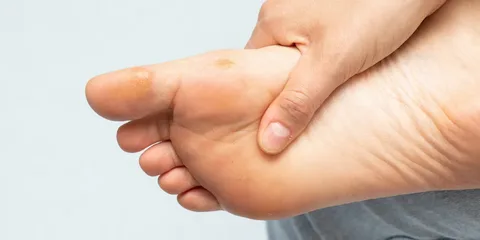
VVerrucae, commonly known as foot warts, are more than just a cosmetic nuisance. They are viral infections that can quickly multiply, causing discomfort, pain, and embarrassment. If you have noticed a small bump on your sole spreading to other areas or appearing on family members, you aren’t alone.
As a leading Podiatry Clinic in Edinburgh, we see hundreds of cases where a single “stubborn spot” has turned into a painful cluster known as mosaic warts. Understanding the biological and environmental reasons why they spread is the first step toward effective, permanent treatment.
What Exactly Is a Foot Wart?
A verruca is caused by the Human Papillomavirus (HPV). Unlike warts found on the hands or elbows, foot warts are subject to the constant pressure of your body weight. This pressure forces the wart to grow inward, often creating a flat, hard patch of skin.
A hallmark sign of a verruca is the presence of tiny black dots within the hard skin. These aren’t “seeds,” as commonly believed, but tiny clotted capillaries that have been drawn to the surface by the virus to feed itself. This is why verrucae often bleed profusely if scratched or cut.
Why Do They Spread So Quickly?
The rapid spread of verrucae is usually down to three main factors:
- The Nature of the Virus: HPV thrives in warm, damp environments and is highly contagious through skin-to-skin contact or contaminated surfaces.
- Micro-trauma: Tiny cracks in the skin, often caused by the dry Scottish weather or friction from walking, provide the perfect entry point for the virus.
- Autoinoculation: This is the process of spreading the virus from one part of your own body to another. Touching, scratching, or using the same towel on a wart and then on healthy skin can move the virus instantly.
The “Edinburgh Factor”: Why Our Lifestyle Matters
Living in a city like Edinburgh presents unique challenges for foot health. From the damp climate to our active, walking-heavy culture, the conditions are often ripe for viral transmission.
Communal Spaces and Damp Conditions
Our Podiatry Clinic in Edinburgh often sees spikes in cases among residents who frequent:
- Local Gyms and Pools: Warm, wet floors in changing rooms are breeding grounds for HPV. The virus can live on damp surfaces for days.
- Yoga and Pilates Studios: Barefoot exercise on shared mats can facilitate the spread if hygiene protocols aren’t strictly followed.
- The “Cobble Effect”: Walking on the uneven surfaces of the Royal Mile or the New Town can cause friction and minor skin abrasions. These microscopic breaks in the skin are the “open doors” the virus needs to settle in.
The Science of Viral Hiding: Why Your Immune System Fails
One of the most common questions we get at our Podiatry Clinic in Edinburgh is: “Why won’t my body just fight this off?”
The HPV virus is incredibly clever. it lives only in the upper layers of the skin (the epidermis). Because this layer doesn’t have a direct blood supply, the virus remains “hidden” from your immune system. Your white blood cells, which patrol the bloodstream, simply don’t know the virus is there. This is why a verruca can persist for years without any sign of healing.
Why Over-the-Counter Treatments Often Fail
Many patients visit our Podiatry Clinic in Edinburgh after months—or even years—of trying pharmacy-bought gels, pens, or plasters. While these can work for minor, very shallow cases, they often fall short for several reasons:
1. The “Maceration” Trap
Many over-the-counter plasters contain salicylic acid that isn’t focused. It can make the surrounding healthy skin white and soggy (macerated). This weakened healthy skin is then actually easier for the virus to invade, leading to the wart “growing” in diameter.
2. Depth of the Infection
Because the weight of walking pushes the verruca deep into the dermis, topical liquids often only “melt” the top layer of dead skin. The viral factory at the base remains untouched, allowing the wart to grow back almost immediately.
3. Painful Chemical Burns
Without the steady hand of a professional at a Podiatry Clinic in Edinburgh, it is difficult to target just the infected tissue. We frequently treat patients who have caused painful chemical burns to their arches or toes by misusing home kits.
Professional Solutions at our Podiatry Clinic in Edinburgh
When a verruca begins to spread, it’s a clear signal that your immune system needs a “nudge.” Professional intervention aims to create a “controlled injury” that alerts your body to the infection.
1. Swift Microwave Therapy
Swift is a game-changer in podiatry. It delivers a precise dose of microwave energy into the skin. This energy vibrates water molecules, creating heat that triggers a “heat shock” response. This alerts the immune system to the presence of the HPV virus, allowing your body to clear the infection naturally from the inside out. It is fast, requires no messy dressings, and you can walk out of the clinic and continue your day immediately.
2. Specialized Acid Treatments
At our Podiatry Clinic in Edinburgh, we use clinical-grade salicylic or monochromatic acetic acids at concentrations much higher than what is available in shops. We carefully debride (remove) the hard overlying callus first, allowing the treatment to reach the viral cells directly.
3. Cryotherapy (Liquid Nitrogen)
Unlike the “freeze sprays” sold in pharmacies which only reach about -50°C, clinical cryotherapy using liquid nitrogen reaches -196°C. This creates a much more effective “freeze-thaw” cycle that destroys the infected cells.
4. Needling (Falknor’s Method)
For very stubborn or “mother” warts, we may perform verruca needling under local anesthetic. By puncturing the wart multiple times with a fine needle, we push the viral particles into the deeper layers of the skin where the blood supply is located, finally “introducing” the virus to your immune system.
5 Vital Tips to Stop the Spread Today
While you wait for your appointment at our Podiatry Clinic in Edinburgh, follow these steps to protect yourself and your family:
- Seal it Up: Keep the wart covered with a simple waterproof plaster. This prevents viral shedding.
- Separate Your Tools: Never use the same nail clippers or pumice stone on a wart that you use on healthy nails or skin.
- Dry Your Feet Last: When stepping out of the shower, dry the affected foot last and immediately put the towel in the wash.
- Disinfect Footwear: HPV can linger in shoe linings. Use an antifungal/antiviral spray in your shoes regularly.
- Don’t Go Barefoot: Wear flip-flops in communal showers and “verruca socks” in swimming pools.
When Should You See a Specialist?
If you are an Edinburgh resident struggling with foot pain, you should book a consultation at a Podiatry Clinic in Edinburgh if:
- The wart is spreading or multiplying.
- The pain is affecting your gait or ability to exercise.
- The wart is bleeding or looks red and angry.
- You have diabetes or a weakened immune system (in these cases, DIY treatment is dangerous).
Conclusion: Reclaim Your Foot Health
Foot warts are persistent, but they are not invincible. The key is to stop the cycle of spread before the infection becomes too large to manage easily. By combining expert clinical debridement with advanced technologies like Swift or high-concentration acids, our Podiatry Clinic in Edinburgh can help you walk pain-free again.
Don’t wait for a single spot to become a cluster. Take action today and ensure your feet are healthy enough to enjoy everything our beautiful city has to offer.
