
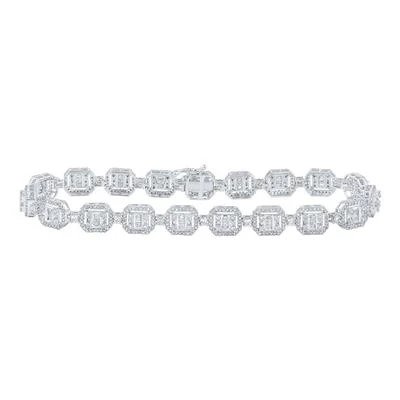
Few pieces of jewelry capture the blend of elegance, sportiness, and timeless chic quite like the diamond tennis bracelet. Sleek, shimmering, and endlessly versatile, this bracelet has become a staple in both high fashion and everyday wear. But its rise to iconic status wasn’t instantaneous — it’s a story marked by style innovation, cultural moments, and enduring craftsmanship.
Origins: From Classic Line Bracelet to Diamond Sensation
The story of the tennis bracelet begins with a simple jewelry style known as the line bracelet — a continuous row of gemstones set closely together in a symmetrical line. This design first gained popularity in the early 20th century, alongside the Art Deco movement’s emphasis on geometric patterns and streamlined forms.
Originally, line bracelets were crafted with many types of gemstones — sapphires, rubies, emeralds — but by mid-century, diamonds had taken center stage. Diamonds offered unrivaled brilliance, and advances in cutting and setting techniques allowed jewelers to produce bracelets with stones that seemed to float on the wrist, reflecting light with unmatched fire.
By the 1950s and 1960s, diamond line bracelets had become a symbol of luxury and elegance, worn by Hollywood stars and socialites at formal events and red-carpet occasions.
The Birth of the “Tennis Bracelet” Name
The term “tennis bracelet” didn’t enter the mainstream lexicon until the late 1970s and early 1980s. Its popularity is credited to a dramatic and unforgettable moment at the 1987 U.S. Open tennis tournament involving one of the sport’s greatest competitors — Chris Evert.
During a close match, Evert’s diamond bracelet snapped off her wrist and fell onto the court. She stopped the game to ask officials to retrieve her bracelet, making the moment a media sensation. Sports commentators repeatedly referenced the bracelet throughout the broadcast, and viewers began referring to that style of diamond line bracelet as a “tennis bracelet.”
This incident crystallized the jewelry’s association with athleticism and elegance, merging the world of high fashion with competitive sport in a way that had never happened before.
Design Features and Craftsmanship
What sets a tennis bracelet apart from other bracelets isn’t just the stones — it’s the meticulous craftsmanship and thoughtful design:
1. Continuous Line of Stones
Unlike charm bracelets or bangles, the hallmark of a tennis bracelet is a continuous, unbroken line of gemstones. Each stone is cut uniformly (often round brilliant or princess cuts) and set closely together, usually in prong or bezel settings that maximize sparkle.
2. Flexibility and Comfort
A defining feature of the tennis bracelet is flexibility. The individual links allow the bracelet to drape fluidly over the wrist, making it comfortable enough for daily wear yet luxurious enough for evening events.
3. Secure Clasping Mechanisms
Given the bracelet’s value and delicacy, secure clasps and safety latches are essential. High-end designs include box clasps with safety catches that prevent accidental loss — a practical evolution from earlier vintage designs.
4. Metal Choices
While yellow gold was traditionally popular, the rise of white gold and platinum settings in the late 20th century enhanced the diamonds’ brightness, giving the tennis bracelet its signature ice-like effect.
Cultural Impact and Celebrity Influence
After the 1987 U.S. Open moment, the tennis bracelet’s popularity exploded across mainstream culture.
Hollywood and the Red Carpet
Actors and actresses began pairing tennis bracelets with everything from ball gowns to tailored suits, elevating the bracelet from a sporty statement to a red-carpet essential. The minimalist design complemented a wide range of fashion choices, making it a go-to accessory for A-list events.
Marriage and Milestone Gifting
Beyond fashion, the tennis bracelet entered the world of meaningful gifting. It became a popular choice for:
- Anniversaries: Symbolizing enduring love with an unbroken string of diamonds.
- Birthdays and graduations: Marking major life achievements.
- Bridal jewelry: Often gifted to brides as an elegant and wearable piece for the wedding day and beyond.
Pop Culture References
Through the 1990s and early 2000s, television shows, music videos, and magazines featured tennis bracelets as the ultimate status symbol — chic, stylish, and unmistakably high end.
Evolution in Style and Interpretation
While the classic diamond tennis bracelet remains beloved, designers have expanded and reinterpreted the form over the years.
Colored Gemstones
Modern variations include sapphires, emeralds, rubies, or mixed gemstone line bracelets. These add color and personal flair while preserving the bracelet’s sleek aesthetic.
Mixed Metals and Textures
Contemporary designers play with settings and metal choices — rose gold for warmth, two-tone metals for contrast, and even pavé or micro-pavé versions for a more delicate sparkle.
Alternate Stone Shapes
Traditionally dominated by round brilliant cuts, tennis bracelets now commonly include princess cut, emerald cut, oval cut, and other modern shapes, giving wearers fresh ways to express individual style.
Adjustable and Stackable Versions
A newer trend is stackable designs, where tennis bracelets of varying sizes are worn together to create layered looks. Adjustable lengths and mixed widths offer versatility for personalized styling.
Why the Tennis Bracelet Endures
There’s a reason the tennis bracelet has remained fashionable for nearly a century: it perfectly balances subtlety and statement.
1. Timeless Elegance
Unlike trend-driven jewelry that can feel dated after a season, the tennis bracelet’s clean lines and continuous sparkle feel perpetually modern.
2. Versatility
Whether with a cocktail dress or a casual tee and jeans, tennis bracelets seamlessly adjust to context. They elevate everyday wear and add refinement to formal attire.
3. Emotional Significance
As a meaningful gift — for weddings, anniversaries, birthdays, and milestones — the tennis bracelet carries emotional weight alongside its aesthetic appeal. Each diamond represents a memory, moment, or milestone.
How to Choose a Tennis Bracelet Today
When shopping for a tennis bracelet, there are several key factors to consider:
Cut, Clarity, Color, and Carat
Like all diamond jewelry, quality is rooted in the 4 Cs:
- Cut: Impacts how much light returns to the eye (sparkle).
- Clarity: Measures internal flaws or inclusions.
- Color: Ranges from colorless to faint yellow (with colorless being most prized).
- Carat Weight: Total diamond weight — more carats generally means a more luxurious look.
Setting Style
Prong settings maximize shine, while bezel settings offer a sleek, contemporary look and added security.
Metal Choice
Platinum and white gold emphasize diamond brilliance. Yellow and rose gold add warmth and vintage charm.
Fit and Comfort
A well-fitted tennis bracelet should move freely but not slide excessively. Adjustable lengths ensure the best fit for everyday comfort.
Final Sparkle: The Legacy of a Classic
From its early days as a refined jewelry form to its serendipitous rise through a televised tennis match, the diamond tennis bracelet has become more than an accessory — it’s a cultural icon. Its evolution reflects the changing tastes of fashion and society: from Hollywood glamour to modern minimalism, from red carpets to everyday wardrobes.
What began as a continuous line of diamonds has become a symbol of enduring elegance, versatility, and personal expression — a piece that transcends trends and generations.
