
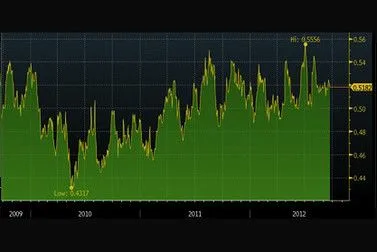
Pairs trading is a market-neutral strategy that focuses on the price relationship between two correlated assets rather than the overall market direction. When using TradingView pairs trading strategies, traders rely on technical indicators to identify divergence and potential mean reversion opportunities. These indicators help traders analyze spreads, measure correlations, and determine optimal entry and exit points.
Using the right indicators can significantly improve the accuracy and consistency of pairs trading strategies.
Understanding Pairs Trading in TradingView
Pairs trading involves buying one asset and selling another related asset simultaneously. The goal is to profit from the temporary divergence between the two prices. When the price relationship returns to its historical average, traders close the positions and capture the profit.
Platforms like TradingView make it easier to analyze two assets together using advanced charting tools, custom indicators, and spread calculations.
For example, traders may analyze competitors such as Visa Inc. and Mastercard Incorporated because their stock prices often move in similar patterns.
1. Z-Score Indicator
The Z-score indicator is one of the most commonly used tools in pairs trading. It measures how far the spread between two assets has moved from its historical average.
If the Z-score rises above a certain threshold, it indicates that the spread has widened significantly and may revert soon.
Typical signals include:
- Z-score above +2 – Possible short opportunity on the outperforming asset
- Z-score below -2 – Possible long opportunity on the underperforming asset
This indicator helps traders identify extreme deviations and potential entry points.
2. Moving Averages
Moving averages are widely used in TradingView pairs trading strategies to identify trends in the spread between two assets. By applying moving averages to the spread chart, traders can observe whether the divergence is expanding or returning toward its average.
Common moving averages used include:
- 20-period moving average
- 50-period moving average
- 200-period moving average
When the spread moves far away from its moving average, it may signal a potential mean reversion opportunity.
3. Correlation Indicator
Correlation measures how closely two assets move together. In pairs trading, traders usually select assets with strong positive correlations.
A correlation value close to +1 indicates that the assets move in similar directions, making them suitable for pairs trading strategies.
Monitoring correlation regularly is important because relationships between assets can change due to market events or industry developments.
4. Bollinger Bands
Bollinger Bands help traders visualize volatility in the spread between two assets. When the spread touches the upper or lower band, it suggests that prices may be stretched beyond normal levels.
Possible signals include:
- Spread touching the upper band – Potential short trade
- Spread touching the lower band – Potential long trade
This indicator works well with mean reversion strategies commonly used in pairs trading.
5. Relative Strength Index (RSI)
The Relative Strength Index helps measure momentum in the spread. When RSI reaches extreme levels, it may indicate that the divergence between the two assets is overextended.
Typical levels include:
- RSI above 70 – Overbought spread
- RSI below 30 – Oversold spread
Combining RSI with spread analysis can improve the timing of trade entries.
Best Practices for Using Indicators
To maximize the effectiveness of TradingView pairs trading strategies, traders often combine multiple indicators rather than relying on a single signal.
Important best practices include:
- Backtest strategies using historical data
- Monitor correlations regularly
- Use proper risk management
- Avoid trading during major news events
Combining statistical indicators with disciplined execution can significantly improve trading results.
Conclusion
Indicators play a crucial role in building successful TradingView pairs trading strategies. Tools such as Z-score, moving averages, correlation analysis, Bollinger Bands, and RSI help traders identify divergence and potential mean reversion opportunities.
By combining these indicators with proper risk management and continuous monitoring, traders can create structured and data-driven trading strategies. Platforms like TradingView provide powerful charting capabilities that make it easier to analyze pairs and execute trades with greater confidence and precision.
