
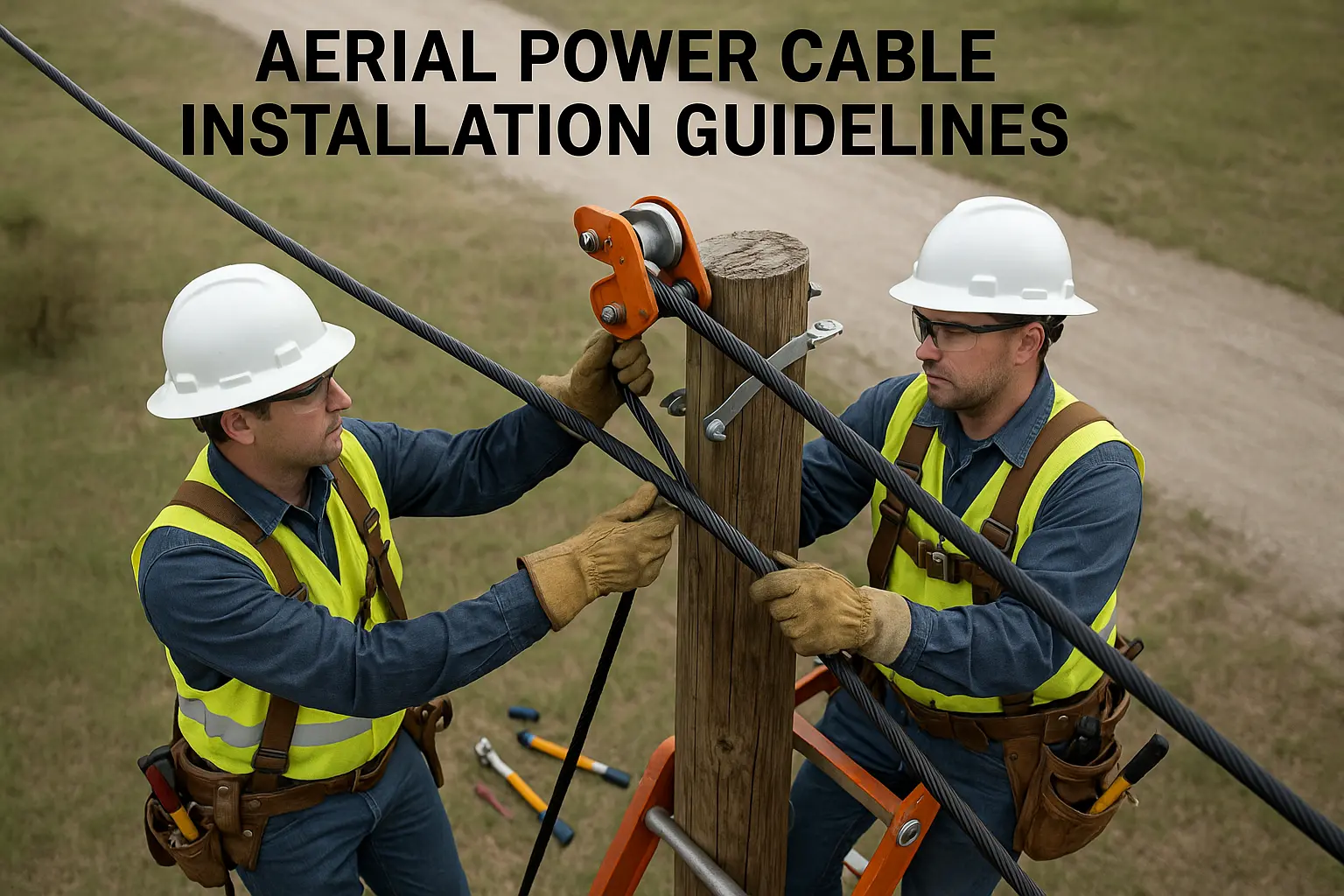
In modern electrical infrastructure, efficient and reliable power transmission is essential for supporting cities, industries, and rural communities. One of the most widely used solutions for overhead distribution systems is the aerial power cable. Designed to transmit electricity safely and efficiently through overhead networks, these cables are essential components in utility grids worldwide.
For power utilities, EPC contractors, and electrical engineers, choosing the right aerial cable system can significantly impact system reliability, installation efficiency, and long-term maintenance costs. As a global manufacturer of overhead conductors and power cables, HNBF Power provides high-quality aerial power cable solutions engineered for modern transmission and distribution applications.
This article explores what aerial power cables are, their types, advantages, applications, and key factors engineers and procurement teams should consider when selecting them.
What Is an Aerial Power Cable?
An aerial power cable is an electrical cable designed for overhead installation on poles, towers, or other support structures to transmit or distribute electricity. Unlike underground cables, aerial cables are installed above ground, making them easier to inspect, maintain, and upgrade.
These cables are commonly used in medium-voltage and low-voltage distribution systems, especially in urban and rural electrical networks where overhead installations are more economical and easier to deploy.
Aerial power cables are engineered with durable conductor materials and insulation systems to withstand environmental conditions such as wind, temperature variations, rain, and UV exposure.
Main Types of Aerial Power Cables
Electrical utilities use several types of aerial cables depending on system voltage, environmental conditions, and installation requirements.
AAC (All Aluminum Conductor)
AAC cables consist entirely of aluminum strands. They are lightweight and highly conductive, making them suitable for short-span distribution networks.
Key benefits include:
- High electrical conductivity
- Lightweight structure
- Excellent corrosion resistance
However, AAC conductors have lower mechanical strength compared to reinforced conductors.
AAAC (All Aluminum Alloy Conductor)
AAAC cables are made from aluminum alloy conductors designed to improve mechanical strength while maintaining good conductivity.
Advantages include:
- Higher tensile strength than AAC
- Better resistance to corrosion
- Longer service life in harsh environments
AAAC cables are widely used in coastal areas and high-corrosion environments.
ACSR (Aluminum Conductor Steel Reinforced)
ACSR is one of the most commonly used overhead conductors in power transmission and distribution networks. It consists of aluminum strands surrounding a steel core that provides mechanical strength.
Key features include:
- High tensile strength for long spans
- Excellent electrical conductivity
- Reliable performance for transmission lines
ACSR is commonly used in high-load power lines and long-distance overhead transmission systems.
ABC (Aerial Bundled Cable)
Aerial Bundled Cable (ABC) is a modern aerial cable solution widely used in low-voltage power distribution. It consists of several insulated conductors bundled together and supported by a messenger wire.
Benefits include:
- Enhanced safety due to insulated conductors
- Reduced risk of power theft and short circuits
- Improved reliability in urban distribution networks
ABC systems are increasingly preferred by utilities upgrading traditional bare conductor networks.
Advantages of Aerial Power Cables
Aerial power cables provide several advantages compared with underground cable systems.
Cost-Effective Installation
One of the biggest advantages of aerial cable systems is their lower installation cost. Since they do not require extensive trenching or underground infrastructure, utilities can deploy overhead systems more quickly and economically.
Easy Inspection and Maintenance
Because aerial cables are visible and accessible, engineers can easily inspect and maintain them. Fault detection and repair are typically faster compared to underground cable systems.
Flexible Network Expansion
Overhead aerial cables allow utilities to expand power distribution networks quickly. New lines can be installed with minimal disruption to existing infrastructure.
Suitable for Remote and Rural Areas
Aerial power cables are ideal for rural electrification projects and remote areas where underground installation would be difficult or expensive.
Applications of Aerial Power Cables
Aerial cables are used in a wide range of power distribution and transmission applications.
Utility Distribution Networks
Electric utilities rely on aerial power cables for low-voltage and medium-voltage distribution systems connecting substations to residential and commercial users.
Industrial Power Supply
Manufacturing facilities, mining sites, and industrial complexes often use aerial cables for temporary or permanent power distribution.
Rural Electrification Projects
Many governments and energy providers use aerial cable systems to extend electricity access to rural and remote communities.
Urban Power Infrastructure
Modern cities increasingly adopt aerial bundled cables (ABC) to improve safety and reduce outages caused by environmental factors.
Key Factors When Selecting an Aerial Power Cable
For engineers and procurement teams, selecting the right aerial cable requires evaluating several technical and operational factors.
Electrical Load Requirements
The cable must be capable of handling the required current capacity and voltage level without overheating or energy loss.
Mechanical Strength
Overhead cables must withstand mechanical stresses caused by wind, ice loading, and long-span installations. Reinforced conductors like ACSR are commonly used for these conditions.
Environmental Conditions
Environmental factors such as temperature, humidity, and pollution levels affect cable performance. Selecting corrosion-resistant materials is essential for long-term reliability.
Installation Method
Engineers must consider pole spacing, tension requirements, and installation techniques when selecting aerial cables for overhead networks.
HNBF Power: A Trusted Aerial Power Cable Manufacturer
As a global supplier of overhead conductor solutions, HNBF Power specializes in manufacturing high-performance aerial power cables designed for modern power transmission and distribution networks.
The company offers a comprehensive product portfolio including:
- AAC conductors
- AAAC conductors
- ACSR conductors
- Aerial bundled cables (ABC)
- LV power cables
- Concentric cables
HNBF Power products are manufactured using advanced production technology and strict quality control processes to ensure high electrical performance, mechanical strength, and long service life.
With extensive experience in international utility projects, HNBF Power supports EPC contractors, power utilities, and infrastructure developers with reliable cable solutions tailored to specific project requirements.
FAQs About Aerial Power Cable
1. What is the difference between aerial cable and underground cable?
Aerial cables are installed above ground on poles or towers, while underground cables are buried beneath the surface. Aerial systems are generally more cost-effective and easier to maintain.
2. Why are ACSR conductors widely used in aerial power lines?
ACSR conductors combine aluminum conductivity with a steel core for added mechanical strength, making them ideal for long spans and heavy electrical loads.
3. Are aerial bundled cables safer than bare conductors?
Yes. Aerial bundled cables use insulated conductors, which reduces the risk of electrical faults, short circuits, and accidental contact.
4. What factors affect the lifespan of aerial power cables?
Environmental conditions, mechanical stress, material quality, and proper installation all influence the lifespan of aerial power cables.
5. Can aerial power cables be customized for specific projects?
Yes. Cable specifications such as conductor size, insulation type, and mechanical strength can be customized to meet different power distribution requirements.
Conclusion
Aerial power cables play a crucial role in modern power transmission and distribution networks. Their cost-effectiveness, ease of installation, and flexibility make them an ideal solution for utilities, infrastructure projects, and rural electrification programs.
Selecting the right cable type whether AAC, AAAC, ACSR, or ABC requires careful consideration of electrical load, environmental conditions, and mechanical requirements.
If you are looking for reliable aerial power cable solutions for utility or infrastructure projects, the engineering team at HNBF Power is ready to help.
Contact HNBF Power today to discuss customized overhead conductor solutions tailored to your power transmission and distribution needs.
