
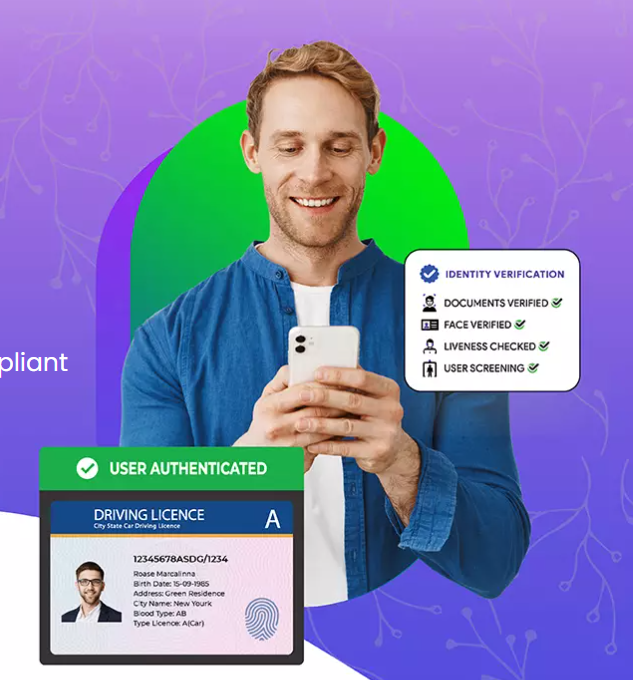
In today’s rapidly evolving digital ecosystem, businesses are increasingly shifting toward online onboarding, remote transactions, and paperless processes. While this transformation improves convenience and scalability, it also exposes organizations to identity fraud, impersonation, and compliance risks. This is where identity verification services and face match verification play a critical role in ensuring security, trust, and regulatory compliance.
What Are Identity Verification Services?
Identity verification services are technology-driven solutions designed to confirm that a person is genuinely who they claim to be. These services validate user identities by analyzing government-issued ID documents, biometric data, and real-time user interactions. Industries such as banking, fintech, telecom, healthcare, and e-commerce rely heavily on identity verification to comply with regulations like KYC (Know Your Customer), AML (Anti-Money Laundering), and data protection standards.
Modern identity verification platforms use AI, machine learning, and optical character recognition (OCR) to extract and validate information from documents such as passports, Aadhaar cards, driving licenses, and national IDs. This automation ensures faster onboarding, reduces manual errors, and minimizes operational costs.
Understanding Face Match Verification
Face match verification is a biometric authentication process that compares a user’s live selfie with the photo available on their identity document. The system analyzes facial features such as eye distance, nose structure, jawline, and skin texture to determine whether both images belong to the same individual.
Advanced face match verification solutions use AI-powered facial recognition algorithms to detect spoofing attempts, including printed photos, video replays, or deepfake attacks. When combined with liveness detection, face match verification ensures that the user is physically present during the verification process, adding an extra layer of security.
Why Businesses Need Face Match Verification
Face match verification significantly enhances the effectiveness of identity verification services by preventing identity theft and account takeovers. It helps businesses:
- Reduce onboarding fraud and fake account creation
- Improve compliance with global KYC and AML regulations
- Deliver faster and frictionless customer onboarding
- Build user trust through secure authentication
- Prevent financial losses caused by impersonation
Use Cases Across Industries
Identity verification services with face match verification are widely used across sectors. Banks and fintech companies use them for customer onboarding and transaction authentication. Telecom providers rely on them for SIM activation. E-commerce platforms implement face match verification to prevent seller fraud, while healthcare providers use it to secure patient access to sensitive records.
Conclusion
As digital interactions continue to grow, the demand for reliable identity verification services is stronger than ever. By integrating face match verification, businesses can create a secure, seamless, and compliant user verification process. These technologies not only protect organizations from fraud but also enhance customer experience by enabling quick and trustworthy digital onboarding.
Investing in robust identity verification solutions is no longer optional—it’s a necessity for sustainable digital growth.
