
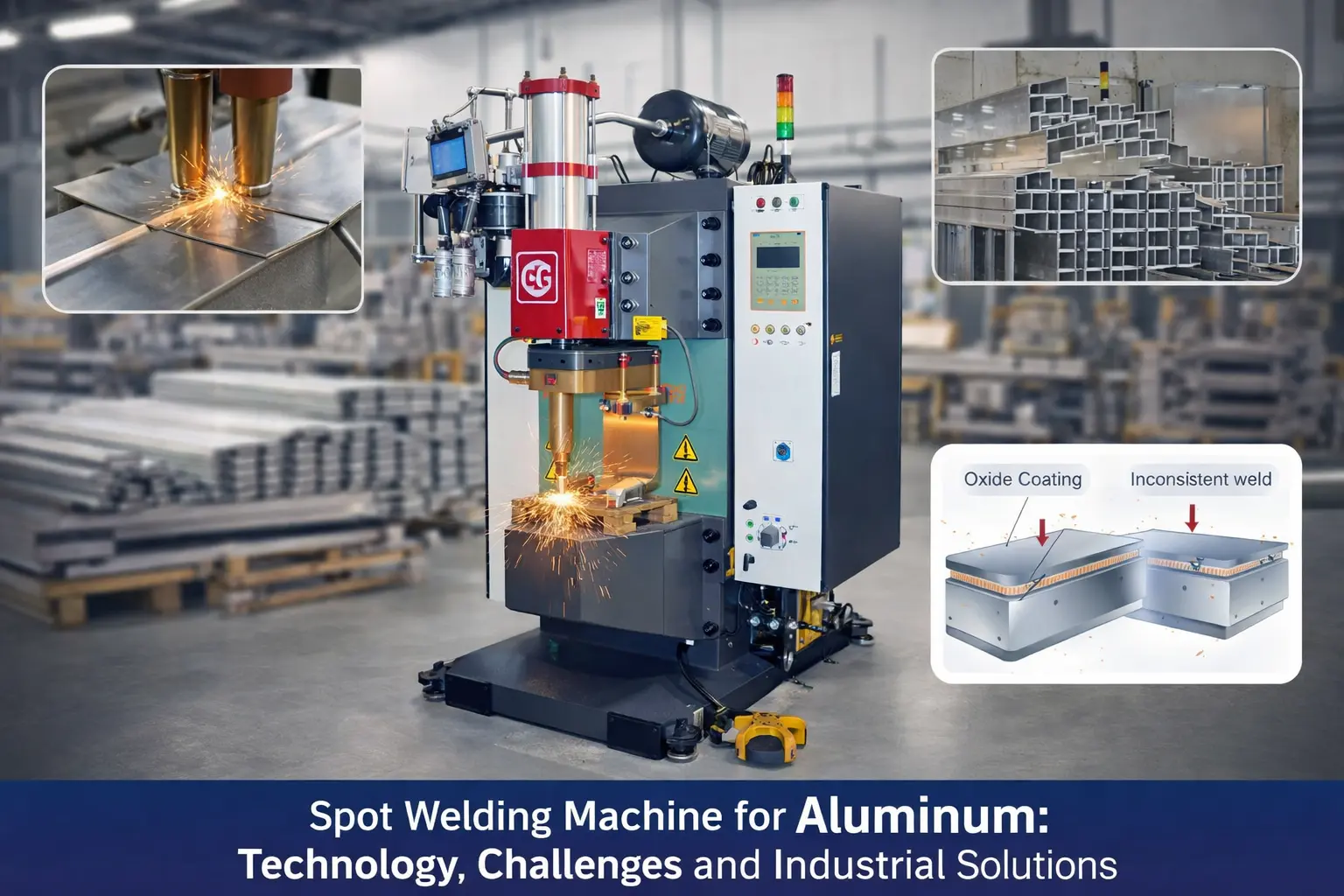
In today’s high-demand manufacturing environment, joining aluminum efficiently and reliably is critical for OEMs, automation integrators, and production engineers. Aluminum’s lightweight properties make it ideal for automotive, aerospace, and electronics applications, but its high thermal conductivity and oxide layer present unique challenges for welding. A spot welder for aluminum is a specialized solution that addresses these challenges, offering precision, repeatability, and integration-ready automation.
Heron Welder, a global leader in industrial welding and metal-joining technology, provides advanced resistance welding machines, automated production lines, and comprehensive consulting to help manufacturers optimize aluminum welding processes.
Understanding Aluminum Spot Welding
Spot welding is a resistance welding process that joins two or more metal sheets by applying pressure and electric current through electrodes at localized points. For aluminum, this process requires careful control due to its high electrical and thermal conductivity. Standard steel welding techniques are often insufficient, leading to weak welds or electrode wear.
Key principles for aluminum spot welding include:
- High current, short cycle times – Aluminum requires more energy than steel to reach the melting point. Controlled pulses ensure proper fusion without burning through.
- Electrode selection – Copper or copper alloys are preferred for aluminum due to their conductivity and resistance to sticking.
- Surface preparation – Removing oxide layers improves weld quality and reduces electrode degradation.
- Precise force control – Uniform pressure prevents aluminum sheets from shifting or creating poor welds.
Heron’s MFDC and capacitor discharge spot welders are engineered specifically for these challenges, delivering consistent welds with minimal maintenance.
Applications of Aluminum Spot Welding
Aluminum spot welding is increasingly used across industries where lightweight, durable, and conductive joints are required.
1. Automotive and EV Manufacturing
Electric vehicles (EVs) rely heavily on aluminum for battery enclosures, body panels, and structural components. Spot welders for aluminum ensure strong, repeatable joints that maintain safety and performance standards while supporting high-volume production lines.
2. Aerospace Components
Aircraft panels and interior frameworks often combine aluminum alloys to reduce weight without compromising strength. Automated aluminum spot welding solutions ensure precision, repeatability, and minimal distortion in critical aerospace applications.
3. Electronics and Appliances
Aluminum housings, frames, and heat sinks benefit from spot welding for efficient, clean joints. Heron’s welding machines enable precise heat control, avoiding component damage while maintaining electrical continuity.
Comparing Aluminum Spot Welding Technologies
Choosing the right spot welding solution depends on production volume, joint complexity, and material thickness.
| Technology | Advantages | Ideal Use Case |
|---|---|---|
| MFDC Spot Welding | Fine control of current and pulse, minimal thermal distortion | Thin aluminum sheets, EV battery packs |
| Capacitor Discharge Welding | Extremely fast weld times, minimal heat-affected zones | Electronics, small assemblies |
| Traditional AC Resistance Welding | Robust, widely available | Heavy aluminum sheets with high throughput |
| Automated Robotic Spot Welding | High repeatability, integration with production lines | Automotive, aerospace, high-volume manufacturing |
Heron’s solutions integrate these technologies with advanced controllers, monitoring, and automation options, ensuring reliable production for even the most demanding applications.
Best Practices for Aluminum Spot Welding
To maximize performance and weld quality:
- Optimize electrode maintenance – Regularly dress and clean electrodes to prevent sticking and inconsistent welds.
- Control material fit-up – Ensure aluminum sheets are flat, clean, and properly aligned to reduce defects.
- Use pulse shaping – Multi-pulse welding techniques help manage heat input and avoid burn-through.
- Monitor process parameters – Heron’s advanced controllers provide real-time feedback for current, pressure, and weld time, ensuring every weld meets specifications.
- Integrate automation where possible – Robotic or automated handling improves throughput, repeatability, and safety in high-volume operations.
Why Choose Heron for Aluminum Spot Welding
Heron Welder has decades of expertise in resistance welding, metal joining, and industrial automation. By offering customized MFDC spot welders, capacitive discharge systems, and automated production lines, Heron enables manufacturers to:
- Achieve consistent weld quality with minimal defects
- Reduce maintenance costs and electrode wear
- Integrate seamlessly with robotic and conveyor systems
- Scale production efficiently without compromising quality
Whether you’re producing EV battery packs, aluminum automotive panels, or high-precision electronic components, Heron’s team of engineers can design and deliver a solution tailored to your factory’s needs.
FAQs
1. Can aluminum be spot welded like steel?
Yes, but aluminum requires higher current, precise timing, and specialized electrodes due to its high conductivity and oxide layer.
2. What is the best thickness range for aluminum spot welding?
Aluminum sheets from 0.5 mm to 3 mm are ideal for MFDC spot welding. Thicker materials may require multi-pulse or specialized electrode designs.
3. How do I prevent electrode sticking on aluminum?
Use copper or copper alloy electrodes, clean and dress electrodes regularly, and apply proper force and current control.
4. Can spot welders be integrated into automated production lines?
Absolutely. Heron offers robotic and conveyor-integrated solutions with advanced controllers for precise aluminum welding.
5. How do I ensure consistent weld quality?
Monitor weld parameters in real time, maintain electrodes, control material preparation, and apply pulse shaping techniques. Heron’s controllers simplify this process.
Get Started with Heron Aluminum Spot Welding Solutions
Optimizing aluminum spot welding is key to improving production efficiency, reducing costs, and delivering high-quality components. Heron Welder combines advanced MFDC, capacitor discharge, and robotic welding technologies with expert consulting to help manufacturers implement reliable, scalable solutions.
Request a quote today or consult Heron’s engineers to design a customized aluminum spot welding solution tailored to your production needs. Elevate your manufacturing process with precision, speed, and confidence.
