
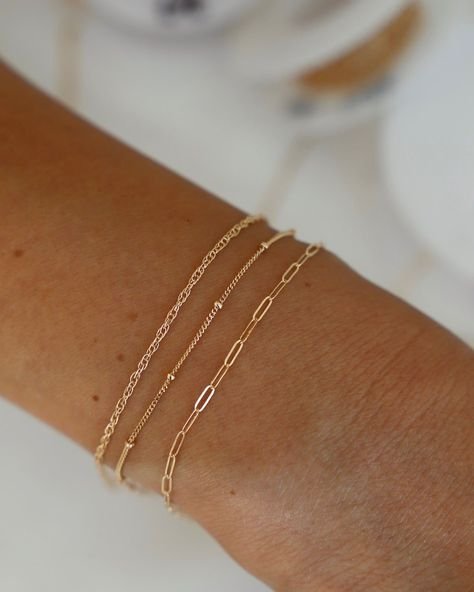
Permanent jewelry has emerged as something more meaningful than a fashion statement. Unlike traditional accessories that are taken on and off, gold jewelry is welded or clasped in a way that allows it to stay on the body continuously.
Bracelets, anklets, and even necklaces become a part of daily life, symbolizing more than style—they represent relationships, emotions, and memories that people choose to carry with them. Beyond its aesthetic appeal, jewelry has developed a deep emotional significance rooted in friendship, love, and personal milestones.
A Symbol That Stays With You
At its core, permanent jewelry is about continuity. The idea of wearing something every day without removing it creates a sense of permanence that mirrors important human connections. People often choose permanent bracelets or chains during meaningful moments: birthdays, graduations, anniversaries, reunions, or spontaneous celebrations of friendship.
Unlike a gift that might be placed on a shelf or worn occasionally, permanent jewelry becomes part of the body’s daily rhythm. It is there during morning routines, workdays, travels, and even life’s most challenging moments. This constant presence transforms it into something deeply personal. Over time, the jewelry is no longer just an accessory—it becomes a silent witness to the wearer’s life.
Friendship Bonded in Metal
One of the most popular reasons people choose permanent jewelry is friendship. Friends visit jewelry studios together, selecting matching chains and having them welded at the same time. This shared experience itself becomes a memory, often filled with laughter, excitement, and even emotional reflection.
For many, the act symbolizes a promise: that no matter where life takes them, the bond remains intact. Unlike friendship bracelets made of thread that can wear out or be removed, jewelry represents a stronger, more enduring commitment.
Friends who move to different cities or countries often find comfort in knowing they share the same piece of jewelry. Every glance at their wrist or ankle becomes a reminder of shared experiences—late-night conversations, inside jokes, road trips, or difficult times they overcame together.
In this way, permanent jewelry becomes a physical extension of emotional connection. It is not about matching outfits or trends; it is about carrying a piece of someone you care about, always close to you.
Love That Is Worn Every Day
Romantic relationships also find powerful meaning in jewelry. Couples choose matching or complementary pieces as a modern symbol of commitment. Unlike engagement rings or wedding bands that often mark formal milestones, jewelry can represent a more personal, everyday kind of love.
Some couples choose it early in their relationship as a symbol of intention and trust. Others may use it to celebrate anniversaries or long-distance relationships, knowing that even when apart, a part of their partner is always physically present.
There is something uniquely intimate about this form of symbolism. Jewelry that cannot easily be removed mirrors the idea of emotional permanence—love that is not taken off at the end of the day but instead remains present through all of life’s moments, both ordinary and extraordinary.
It also reflects modern relationships, where meaning is often found in personalization rather than tradition. A simple chain becomes a powerful statement: “You are always with me.”
Memory Made Tangible
Beyond friendship and romantic love, permanent jewelry often represents personal milestones and memories. People choose it to mark significant life events such as recovery from illness, graduation from school, career achievements, or the birth of a child.
These pieces act like emotional anchors. When life feels overwhelming or changes rapidly, a glance at the jewelry can bring the wearer back to a specific moment in time. It becomes a physical reminder of strength, growth, and transformation.
For example, someone who overcame a difficult period in their life might choose a permanent bracelet as a symbol of resilience. Every time they see it, they are reminded not of pain, but of survival and progress. In this way, the jewelry becomes part of their healing process.
Even simple, everyday moments can become memories attached to the piece. A spontaneous trip with friends, a meaningful conversation, or a personal breakthrough can all be tied to the moment the jewelry was first placed on the body.
The Emotional Ritual of Getting It Done
The experience of getting jewelry is itself meaningful. It is not just a purchase—it is a ritual. The process usually involves choosing a chain, sitting with someone important, and having it carefully welded in place. This moment often feels ceremonial.
There is anticipation, excitement, and sometimes even nervousness. When the jewelry is finally secured, it marks a transition. Something symbolic has been made real and lasting.
For many people, this ritual is shared. Friends hold hands while the welding is done, couples exchange smiles, or individuals quietly reflect on what the piece represents. The moment becomes part of the memory the jewelry is meant to preserve.
The Beauty of Permanence in a Temporary World
Modern life is often fast-paced and temporary. Relationships change, locations shift, and digital interactions replace physical presence. In this environment, jewelry offers something grounding.
It is not just about aesthetics; it is about stability. The idea that something can remain unchanged while everything else evolves is deeply comforting. It provides a sense of emotional security.
Even though the jewelry itself is small and simple, its meaning can be enormous. It reminds people that certain connections, emotions, and memories deserve to be carried forward without interruption.
When Jewelry Becomes Identity
Over time, jewelry can become part of a person’s identity. Because it is worn constantly, it integrates into how someone sees themselves. It is no longer something they put on—it becomes something they are used to seeing as part of their reflection.
People often forget they are wearing it until someone asks about it. That moment opens the door to storytelling: where it came from, what it represents, and why it matters. In this way, the jewelry becomes a conversation starter and a storytelling device.
Each piece holds a different meaning depending on the wearer. Two identical bracelets can represent completely different emotions—one might symbolize friendship, another healing, another love. The value is not in the material but in the meaning assigned to it.
Conclusion
Permanent jewelry is more than a trend in fashion—it is a modern expression of human emotion. It captures friendship in its strongest form, love in its most personal state, and memories in a way that is both visible and lasting.
In a world where so much is temporary, the appeal of something permanent lies in its emotional weight. These small chains and bracelets carry stories that are deeply personal, often invisible to others but powerful to the wearer.
