
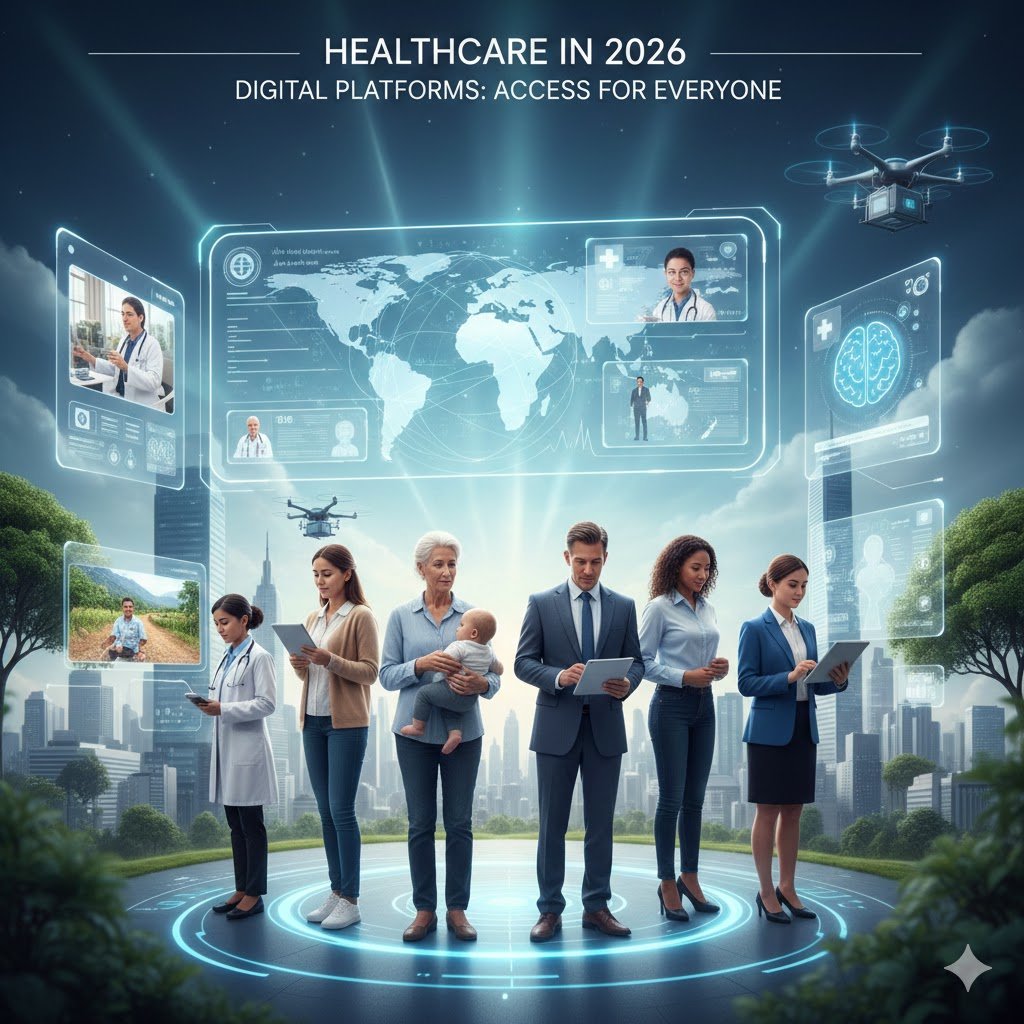
Healthcare has always been essential, but access to it has not always been equal. Many people struggle to get quality care worldwide. Long wait times, a lack of specialists, geographic barriers, and high costs all add to this problem. As we move into 2026, digital platforms are quietly reshaping this reality. Healthcare is more accessible, flexible, and focused on patients than ever.
This shift is not about replacing doctors or hospitals. It’s about breaking down barriers that keep people from getting the care they need. Digital healthcare platforms help people manage their health. They also support providers with improved systems, smarter workflows, and scalable technology.
The Growing Need for Digital Healthcare Solutions
Modern lifestyles have changed how people approach healthcare. Busy schedules and remote work mean people want quicker, easier solutions. Also, more health awareness drives this demand. Healthcare systems face pressure from aging populations, staff shortages, and rising costs.
Digital platforms step in to bridge these gaps. They help healthcare services reach patients outside of clinics. Support comes through mobile apps, patient portals, and web-based systems. By 2026, these platforms won’t be optional. They will be central to how healthcare is delivered.
Telehealth as a Normal Part of Care
Telehealth is one of the most visible ways digital platforms are expanding access. Virtual consultations let patients talk to healthcare professionals from home. This saves time and travel costs. This helps people in rural areas, parents, seniors, and those with mobility challenges.
In 2026, telehealth platforms will be more refined and reliable than ever. Video quality improves, scheduling gets easier, and digital records fit nicely into patient profiles. For many routine consultations, virtual care is now the first step rather than a last resort.
Digital Platforms Empowering Patients
One of the biggest changes brought by digital healthcare is patient empowerment. Now you can see your medical records, prescriptions, test results, and appointment history all in one place. This transparency helps people understand their health better and make informed decisions.
Health tracking tools, reminders, and educational resources also play a key role. Digital platforms help patients stay engaged with their care. They manage chronic conditions, check wellness goals, and follow treatment plans. This connection keeps patients from feeling disconnected.
Breaking Geographic and Economic Barriers
Access to quality healthcare often relies on where a person lives and how much they can afford. Digital platforms are helping to reduce these inequalities. Remote consultations connect patients to specialists they might never have access to locally. Online health services reduce travel expenses and time away from work.
Often, digital care options are more cost-effective for both providers and patients. Clinics can use resources better. Patients enjoy lower consultation costs and fewer extra expenses. In 2026, balancing affordability and quality fuels the growth of digital healthcare.
The Role of Secure and Scalable Technology
Behind every successful digital healthcare platform is strong technology. Secure systems guard sensitive patient data. Scalable architecture helps platforms meet increasing user demand. Healthcare providers need stable and flexible systems. These systems must fit seamlessly into their current workflows without causing disruptions.
This is where modern development approaches matter. Many healthcare companies hire remote PHP developers, often working with leading PHP development teams. These professionals build and maintain secure portals, patient dashboards, and backend systems. PHP remains popular due to its reliability, flexibility, and compatibility, making it ideal for healthcare platforms that require long-term stability.
Automation Improving Efficiency and Care Quality
Automation is another key driver of accessibility. Digital platforms automate appointment booking, billing, follow-ups, and record updates, reducing administrative workloads. This lets healthcare professionals focus more on patients and less on paperwork.
Automated reminders help patients stay consistent with appointments and treatments, improving outcomes. In 2026, automation won’t replace humans. Instead, it will support them. This makes care timely, organized, and consistent.
Supporting Families and Caregivers
Digital healthcare platforms are especially valuable for families and caregivers. Parents, adults assisting older relatives, and those juggling work and life can access care more easily.
Online consultations, shared medical records, and central communication help family members and healthcare providers collaborate easily. Easy access lowers stress. It helps families focus on health. This way, they can be proactive instead of reacting to emergencies.
Data-Driven Insights for Better Decisions
Digital platforms gather important health data. This data helps improve the quality of care. When used safely, this data helps providers spot patterns. It also improves treatment plans and offers more personalized care.
In 2026, data-driven healthcare does not mean impersonal care. Instead, it supports healthier living through smarter decisions, earlier intervention, and better long-term lifestyle management. Patients benefit more from care that adapts to their daily routines and personal needs than from one-size-fits-all solutions.
Building Trust Through Privacy and Transparency
Trust is essential in healthcare, and digital platforms must earn it. Strong security measures, clear privacy policies, and transparent communication are critical. Platforms that prioritize patient confidentiality build confidence and encourage adoption.
Digital healthcare is growing. Platforms that rank secure development and ethical data use will stand out. This trust helps digital healthcare grow sustainably. Without it, there would be more resistance and hesitation.
Healthcare Access as a Lifestyle Improvement
Digital healthcare is powerful because it easily fits into daily life. People can get care whenever it works for them. They don’t have to change their schedules for appointments. They can use digital tools to find clear and organized health info. This helps them avoid feeling overwhelmed.
In 2026, healthcare will become less intimidating and more approachable. Digital platforms make regular check-ins, preventive care, and health management normal. This supports a balanced lifestyle.
Looking Ahead: A More Inclusive Healthcare Future
The expansion of digital healthcare platforms is not a trend—it is a transformation. As technology advances, healthcare will be more inclusive, flexible, and tailored to individual needs.
In 2026, healthcare blends human skill with dependable digital systems. This change means quality care is now available anytime and anywhere, for all levels of complexity. Digital platforms aren’t replacing traditional care. They’re boosting it and making healthcare easier for everyone to access.
