
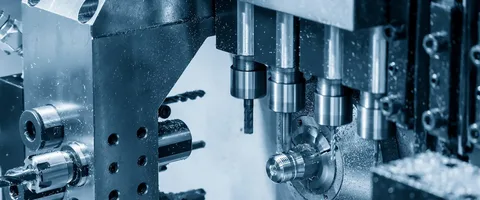
CNC (Computer Numerical Control) technology has transformed modern manufacturing, especially in metal fabrication. Its ability to deliver precision, speed, and repeatability has made it an essential tool across industries such as automotive, aerospace, construction, and heavy machinery. The applications of cnc machining in metal fabrication continue to expand as companies demand higher accuracy and efficiency in production.
Precision Cutting and Shaping in Metal Fabrication
CNC machining plays a vital role in precision cutting and shaping of metals such as steel, aluminum, brass, and titanium. Unlike traditional manual methods, CNC machines follow programmed instructions that ensure extremely accurate cuts, reducing material waste and improving consistency. This makes them ideal for complex geometries that are difficult to achieve manually.
In metal fabrication workshops, precision is everything. CNC cutting tools such as plasma cutters, laser cutters, and milling machines allow fabricators to produce intricate designs with minimal error. This has significantly improved production standards and reduced dependency on manual labor.
Key applications include:
- Laser cutting of metal sheets with high accuracy
- Plasma cutting for thick metal plates
- CNC milling for complex metal shapes
- Automated edge trimming and profiling
- Reducing material waste through optimized cutting paths
The applications of cnc machining in precision cutting ensure that manufacturers achieve tight tolerances and superior product quality consistently.
CNC Machining for Structural Components
Structural metal components require strength, durability, and accuracy. CNC machining ensures these requirements are met by producing highly precise parts used in construction frameworks, bridges, and industrial machinery. This level of precision enhances safety and long-term performance.
In addition, CNC systems can handle large-scale metal blocks and transform them into structural parts with complex geometries. This reduces the need for multiple machining steps and increases production efficiency.
Key applications include:
- Manufacturing steel beams and support structures
- Producing machine frames and housings
- Fabrication of automotive chassis components
- Creating load-bearing industrial parts
- Drilling precise holes for assembly structures
Among the most important applications of cnc machining, structural fabrication ensures reliability in heavy-duty environments where precision and strength are critical.
Custom Parts Manufacturing and Prototyping
One of the most valuable uses of CNC technology is in custom metal parts manufacturing and prototyping. Engineers and designers rely on CNC machines to quickly turn digital designs into physical components, allowing rapid testing and development.
This capability significantly reduces product development cycles. Instead of waiting weeks for manual fabrication, prototypes can be produced within hours or days with high accuracy and repeatability.
Key applications include:
- Rapid prototyping for product design testing
- Custom fabrication of replacement parts
- Small-batch production of specialized components
- Engineering model development
- On-demand manufacturing for unique designs
The applications of cnc machining in prototyping help businesses innovate faster and bring products to market with improved design accuracy and reduced costs.
Automation and Mass Production Efficiency
CNC machining has revolutionized mass production in the metal fabrication industry through automation. Once a program is created, machines can run continuously with minimal human intervention, increasing productivity and reducing operational costs.
This automation also ensures uniformity across large production runs. Every component produced is identical, which is essential in industries where precision and consistency are critical, such as aerospace and automotive manufacturing.
Key applications include:
- High-volume production of metal parts
- Automated machining of identical components
- Continuous production with minimal downtime
- Integration with robotic loading systems
- Reduction in labor costs and human error
The applications of cnc machining in automation allow manufacturers to scale operations efficiently while maintaining strict quality standards.
Quality Control and Surface Finishing Applications
CNC machining is not only about shaping metal but also ensuring high-quality finishes and tight tolerances. Advanced CNC systems are capable of performing finishing operations that improve surface smoothness and overall product appearance.
Quality control is enhanced through computer programming, which ensures every cut and movement is precisely executed. This reduces defects and ensures compliance with industry standards.
Key applications include:
- Surface polishing and smoothing operations
- Precision grinding for fine tolerances
- Consistent quality inspection through programmed accuracy
- Deburring and edge finishing of metal parts
- Maintaining dimensional accuracy in production runs
The applications of cnc machining in quality control ensure that metal fabrication products meet strict engineering and industrial requirements.
Conclusion
CNC machining has become a cornerstone of the modern metal fabrication industry. From precision cutting and structural component manufacturing to automation and quality control, its impact is undeniable. The wide-ranging applications of cnc machining demonstrate how this technology enhances productivity, accuracy, and efficiency across all stages of production.
As industries continue to evolve, CNC machining will remain a key driver of innovation, enabling manufacturers to produce stronger, more precise, and more complex metal components than ever before.
