
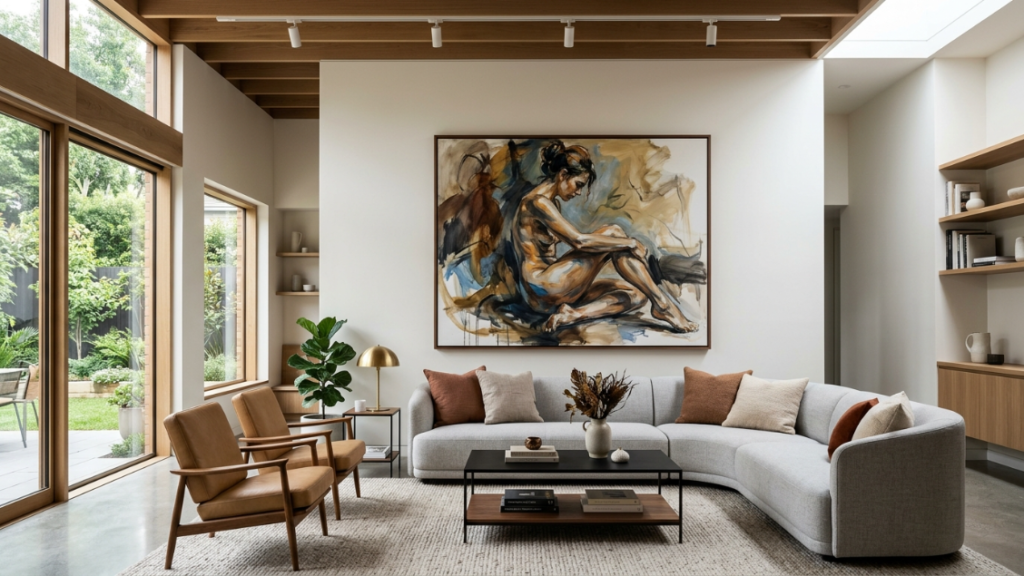
Walk into a contemporary home today and you are increasingly likely to spot a painting of a human figure rather than the abstract or landscape pieces that dominated the last decade. Figurative Art has quietly returned to the center of interior design conversations, driven by a renewed appetite for art that feels emotionally direct rather than purely decorative.
Unlike abstract compositions, figurative pieces immediately offer a point of connection. A painted face, gesture, or posture taps into something universally human, allowing viewers to project their own stories onto the figure depicted. This makes figurative art particularly effective in rooms meant for connection and conversation, such as living rooms, dining areas, and entry hallways where guests naturally pause to look.
Part of the renewed interest comes from a broader cultural shift away from impersonal, catalog-style decorating. Homeowners want spaces that feel curated and meaningful rather than generic, and a striking figurative piece does heavy lifting in that regard. A single well-chosen painting of a person can communicate more personality than several smaller, unrelated decorative objects combined.
Stylistically, today’s figurative art spans a wide range, from realistic portraiture to loosely gestural, almost abstracted human forms that hint at a figure without fully resolving it. This stylistic flexibility means figurative work can suit minimalist Scandinavian interiors just as comfortably as warmer, eclectic spaces. Collections curated by studios such as Artextured often showcase this range, pairing expressive brushwork with universally relatable subject matter.
Color and scale decisions matter enormously with figurative pieces, since the human form draws the eye more forcefully than abstract shapes or landscapes. A large figurative painting tends to dominate a room’s atmosphere, so designers often recommend pairing it with simpler surrounding decor to avoid visual competition. Smaller figurative works, by contrast, can be grouped thoughtfully to build a narrative across a wall.
As people increasingly seek art that reflects emotional depth and human presence rather than purely aesthetic filler, figurative painting looks set to remain one of the strongest categories in contemporary home decor for years to come.
Collectors new to figurative art sometimes worry about long-term appeal, fearing a depicted face or body might feel dated after a few years the way fashion-driven decor often does. In practice, well-executed figurative painting tends to age more like classic portraiture than trend-driven design, since the human form itself does not go out of style the way specific color palettes or patterns can.
Lighting a figurative piece thoughtfully also extends its presence within a room. Soft, warm lighting tends to flatter painted skin tones and expressive brushwork, while harsh overhead lighting can flatten the piece and mute its emotional impact. Many collectors find that a dedicated picture light or repositioned lamp meaningfully improves how a figurative painting reads within a living space.
Subject age and expression within figurative work also influence how a piece integrates into a home. Younger, more expressive faces tend to add energy and movement to a room, while older, more composed figures often introduce a sense of gravitas and quiet dignity. Many collectors build figurative collections deliberately around this emotional range, selecting pieces that complement different rooms based on the specific mood each space is meant to support.
Frequently Asked Questions
Why has figurative art become more popular in home decor recently? Homeowners are seeking art with emotional depth and human connection rather than purely decorative abstract or generic pieces, and figurative work delivers that directly.
What rooms work best for figurative paintings? Living rooms, dining spaces, and entryways tend to work especially well, since these are areas where people naturally pause and engage with artwork.
Should figurative art match the people who live in the home? Not necessarily; many collectors choose figurative pieces for emotional tone or stylistic appeal rather than literal resemblance to themselves or family members.
