
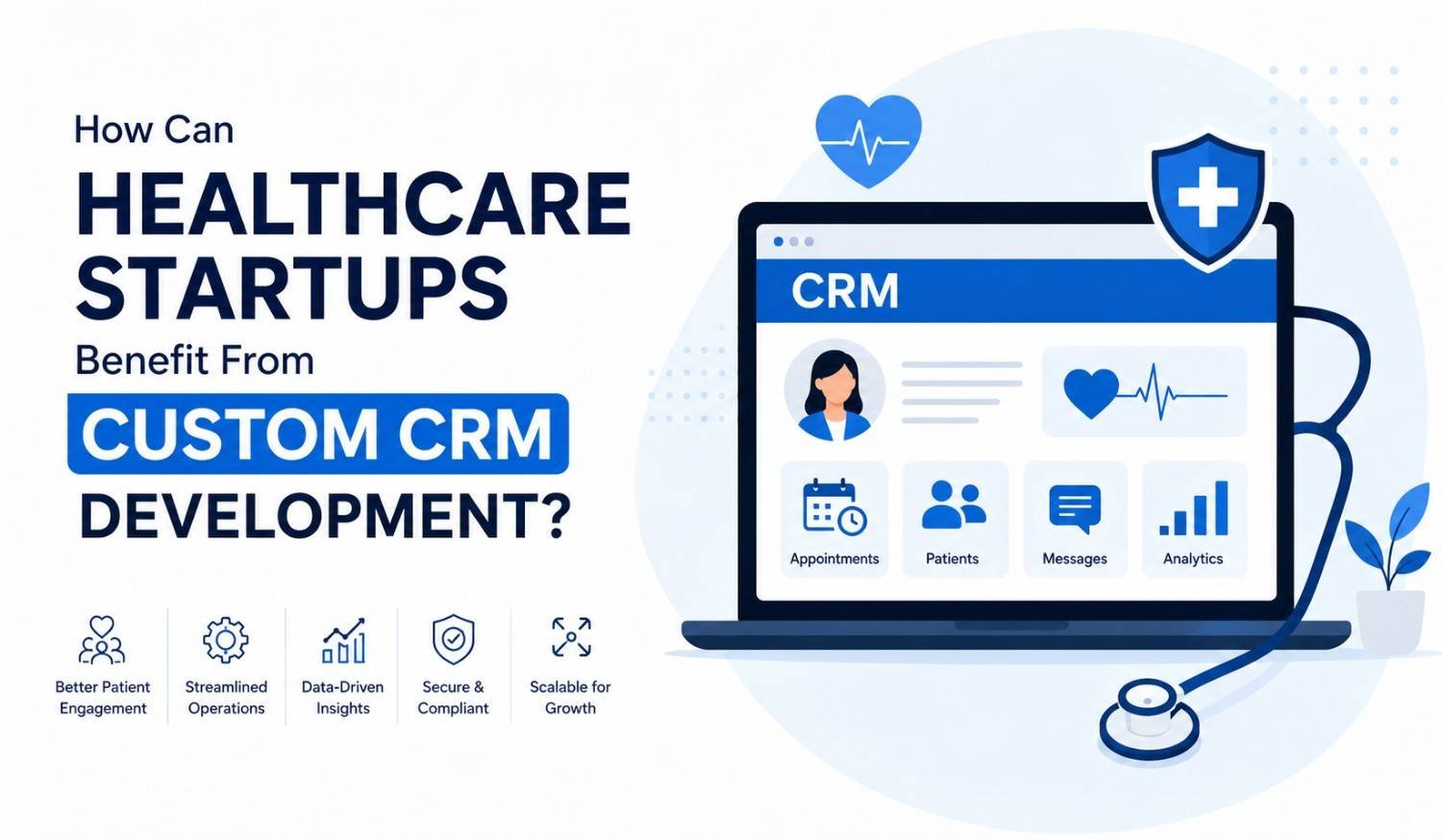
Startups move fast sometimes, so fast that patient inquiries, appointment requests, and follow-ups begin living in spreadsheets nobody wants to open on Monday morning. A growing healthcare business needs more than sticky notes and generic software pretending to understand medical workflows. That is where custom CRM solutions step in. They help organize patient communication, automate repetitive work, and improve operational efficiency without creating extra chaos. Many startups realize this after spending months juggling disconnected systems and several cups of emergency coffee. A tailored CRM creates smoother operations while helping healthcare providers deliver a better patient experience from day one.
Why Healthcare Startups Need Smarter Systems From Day One
Healthcare startups face pressure from every direction—patient expectations, compliance rules, scheduling issues, and operational costs. Managing everything manually may seem manageable at first, but growth changes the story quickly. Patient records multiply, communication becomes scattered, and small inefficiencies suddenly become expensive problems. Smart systems help startups avoid those growing pains before they become permanent headaches. A properly designed CRM centralizes operations, improves coordination, and reduces human error. Startups that adopt scalable technology early usually spend less time fixing processes later. Nobody enjoys rebuilding operations in the middle of business growth—it feels like changing tires during a race.
What Makes Custom CRM Different From Off-the-Shelf Software?
Generic CRM software often works like oversized hospital gowns—technically usable, but never truly comfortable. Healthcare startups need systems built around their specific workflows, patient journeys, and operational goals. Custom CRM solutions provide flexibility that prebuilt software simply cannot match. Features can be tailored for appointment tracking, patient communication, billing coordination, or telehealth integration without unnecessary clutter slowing everyone down. Teams only use tools relevant to their business operations, which improves productivity significantly. Working with experienced custom crm developers also allows startups to adapt the software as their services evolve instead of replacing entire systems every few years.
Better Patient Engagement Leads to Better Retention
Patients expect healthcare communication to feel timely, personalized, and organized—not like waiting for a forgotten voicemail from 2007. A custom CRM helps startups build stronger relationships through automated reminders, follow-up scheduling, personalized messaging, and centralized patient histories. Faster responses create trust, while consistent communication improves patient retention. Healthcare startups benefit greatly when patients feel remembered instead of processed through a system. Even small touches like appointment confirmations and wellness reminders improve the overall experience. In healthcare, trust drives loyalty, and loyalty drives growth. Technology cannot replace human care, but it certainly helps keep the entire process from falling apart.
Streamlining Administrative Tasks Without Burning Out Teams
Administrative work quietly consumes hours inside healthcare startups. Teams spend valuable time entering duplicate data, searching emails, updating spreadsheets, and managing scheduling conflicts instead of focusing on patient care. A customized CRM automates many of these repetitive tasks while centralizing information into one manageable system. Appointment tracking, task assignments, billing updates, and internal communication become far easier to manage. Operations feel smoother because employees stop switching between disconnected tools every few minutes. Many startup founders discover this after realizing their “temporary process” somehow survived two years longer than expected. Automation reduces stress while giving teams more time for meaningful work.
How Data Insights Help Healthcare Startups Make Better Decisions
Data tells important stories—assuming somebody can actually find the information without opening twelve browser tabs first. A custom CRM provides centralized analytics that help healthcare startups monitor patient engagement, operational efficiency, and service performance in real time. Business owners can identify trends, improve workflows, and make informed decisions based on accurate information rather than assumptions. Reporting dashboards simplify performance tracking while revealing growth opportunities. Startups gain better visibility into patient behavior and operational bottlenecks before problems escalate. Smart decisions become easier when teams stop guessing and start working with organized, accessible data collected through a properly customized CRM system.
Security and Compliance Become Easier With Customized CRM Solutions
Healthcare businesses handle sensitive patient information daily, which means security mistakes can become expensive very quickly. Custom CRM systems help startups build workflows that support compliance requirements while improving data protection. Features such as role-based access, secure storage, encrypted communication, and audit tracking create safer operational environments. Unlike generic platforms, customized systems can be designed around healthcare-specific regulations and internal security needs. Compliance becomes easier because the CRM supports proper processes from the beginning. Healthcare startups already juggle enough responsibilities—worrying about avoidable security gaps should not become another item added to the weekly panic list.
Integration Capabilities That Keep Everything Connected
Disconnected systems create operational confusion faster than anyone likes to admit. One platform stores appointments, another handles billing, and a third somehow contains patient messages nobody checks regularly. Custom CRM development solves this issue by integrating multiple healthcare tools into one connected environment. Startups can synchronize patient records, telemedicine platforms, EHR systems, payment gateways, and communication tools seamlessly. Information flows smoothly between departments, reducing duplicate work and minimizing errors. Better integration improves efficiency across the organization while simplifying the patient experience. Healthcare startups operate more effectively when technology works together instead of behaving like coworkers avoiding eye contact during meetings.
Scaling Healthcare Operations Without Rebuilding Everything Later
Growth sounds exciting until outdated systems begin slowing every department down. Healthcare startups often underestimate how quickly operational demands increase as patient volumes grow. A scalable CRM helps businesses prepare for expansion without rebuilding internal processes repeatedly. New workflows, additional services, larger patient databases, and multi-location operations can be supported without major disruptions. Customized platforms evolve alongside business goals, which saves time and prevents costly system replacements later. Startups that invest in scalable technology early typically avoid painful transitions down the road. Growth should feel like progress—not an exhausting exercise in fixing broken operational shortcuts from the past.
Why Choosing the Right Development Partner Matters
Technology alone does not guarantee success. The development partner behind the CRM plays a major role in how effective the final system becomes. Healthcare startups benefit from working with a reliable custom CRM development company that understands industry challenges, compliance needs, and operational workflows. Strong communication, ongoing support, and scalable development strategies help create better long-term outcomes. Experienced teams focus on building practical solutions instead of overwhelming businesses with unnecessary complexity. Choosing the wrong partner often leads to delays, confusion, and expensive revisions later. Healthcare startups need collaboration partners who understand healthcare operations—not just software terminology and presentation slides.
Common Mistakes Healthcare Startups Make While Choosing CRM Solutions
Many healthcare startups choose CRM software based only on price, which usually becomes expensive later for completely different reasons. Generic systems may appear affordable initially but often lack flexibility, integration capabilities, and scalability. Some businesses overlook staff usability, creating systems employees avoid using whenever possible. Others ignore future growth needs entirely and end up replacing software too soon. Another common mistake involves depending heavily on rigid templates that fail to support healthcare-specific workflows. Technology should simplify operations, not create additional confusion. Selecting the right CRM requires careful planning because shortcuts in software decisions rarely stay “temporary” for very long.
A Quick Observation From Real Startup Conversations
Conversations with healthcare startup founders often sound surprisingly similar. One spreadsheet manages patient leads, another handles appointments, and somebody still keeps passwords inside a notebook “for safety.” At some point, every growing healthcare business reaches the same realization—manual systems simply cannot keep up anymore. Operations become harder to manage, communication slows down, and employees spend more time organizing information than using it productively. That moment usually arrives right before a founder says, “We probably should have fixed this earlier.” A custom CRM helps eliminate operational chaos before it becomes deeply embedded into everyday business routines.
Future Trends in Healthcare CRM Development
Healthcare CRM technology continues evolving alongside patient expectations and digital healthcare innovation. Artificial intelligence, predictive analytics, workflow automation, and personalized patient engagement are becoming increasingly important for modern healthcare startups. Future CRM platforms will provide deeper insights into patient behavior while automating repetitive operational tasks more efficiently. Telehealth integration and real-time communication tools will also continue expanding. Healthcare businesses that adapt early often gain competitive advantages in patient satisfaction and operational efficiency. The future of healthcare technology focuses heavily on personalization and automation—which sounds impressive until someone forgets their password for the sixth time this month.
Conclusion
Healthcare startups operate inside a demanding environment where patient care, operational efficiency, and business growth must all move together smoothly. A customized CRM helps simplify processes, improve communication, strengthen patient relationships, and support long-term scalability without unnecessary complexity. More importantly, it gives healthcare teams room to focus on delivering quality care instead of constantly managing administrative chaos. Growth becomes far more manageable when technology supports the business properly from the beginning. After all, healthcare startups already face enough challenges daily. Fighting with outdated spreadsheets and disconnected systems should not become part of the treatment plan.
FAQs
What is custom CRM development in healthcare?
Custom CRM development involves creating a tailored customer relationship management system designed specifically for healthcare operations. Unlike generic platforms, these systems support patient management, appointment scheduling, billing coordination, communication tracking, and compliance requirements. Healthcare startups benefit from workflows built around their exact operational needs instead of adjusting their processes to fit prebuilt software limitations.
How can healthcare startups improve patient communication with CRM software?
A customized CRM helps automate appointment reminders, follow-up messages, patient notifications, and inquiry management. Faster communication improves patient trust while reducing missed appointments and delayed responses. Centralized communication tools also help healthcare teams manage conversations more efficiently without switching between multiple platforms throughout the day.
Is custom CRM software secure for healthcare businesses?
Yes, properly developed CRM systems can include strong security features such as encrypted data storage, role-based access control, secure patient portals, and compliance-focused workflows. These features help healthcare startups protect sensitive patient information while supporting industry regulations and reducing operational risks related to data handling.
Why should healthcare startups avoid generic CRM systems?
Generic CRM platforms often include unnecessary features while lacking healthcare-specific functionality. Startups may struggle with limited customization, poor integrations, and scalability problems as operations grow. A tailored solution supports unique healthcare workflows more effectively and prevents businesses from rebuilding systems later when operational demands increase.
How do custom crm developers help healthcare startups scale faster?
Experienced custom crm developers build systems designed around future business growth. They create scalable workflows, automate repetitive tasks, improve reporting capabilities, and integrate essential healthcare tools into one connected environment. This allows startups to expand operations without constantly replacing or restructuring internal systems.
Can a custom CRM integrate with telemedicine and EHR platforms?
Yes, custom CRM solutions can integrate with telemedicine software, EHR systems, billing tools, payment gateways, and communication platforms. These integrations improve operational efficiency by centralizing patient data and reducing duplicate manual work across different healthcare systems.
How long does custom CRM development usually take?
Development timelines depend on project complexity, required integrations, features, and customization needs. Smaller healthcare CRM solutions may take a few months, while advanced enterprise-level systems often require longer development cycles. Proper planning and clear business goals usually help speed up implementation significantly.
What are the biggest benefits of working with a custom CRM development company?
A reliable custom CRM development company provides industry expertise, tailored solutions, technical support, and long-term scalability planning. Healthcare startups gain software designed specifically for their workflows instead of relying on generic tools that may not fully support operational goals or future growth plans.
