
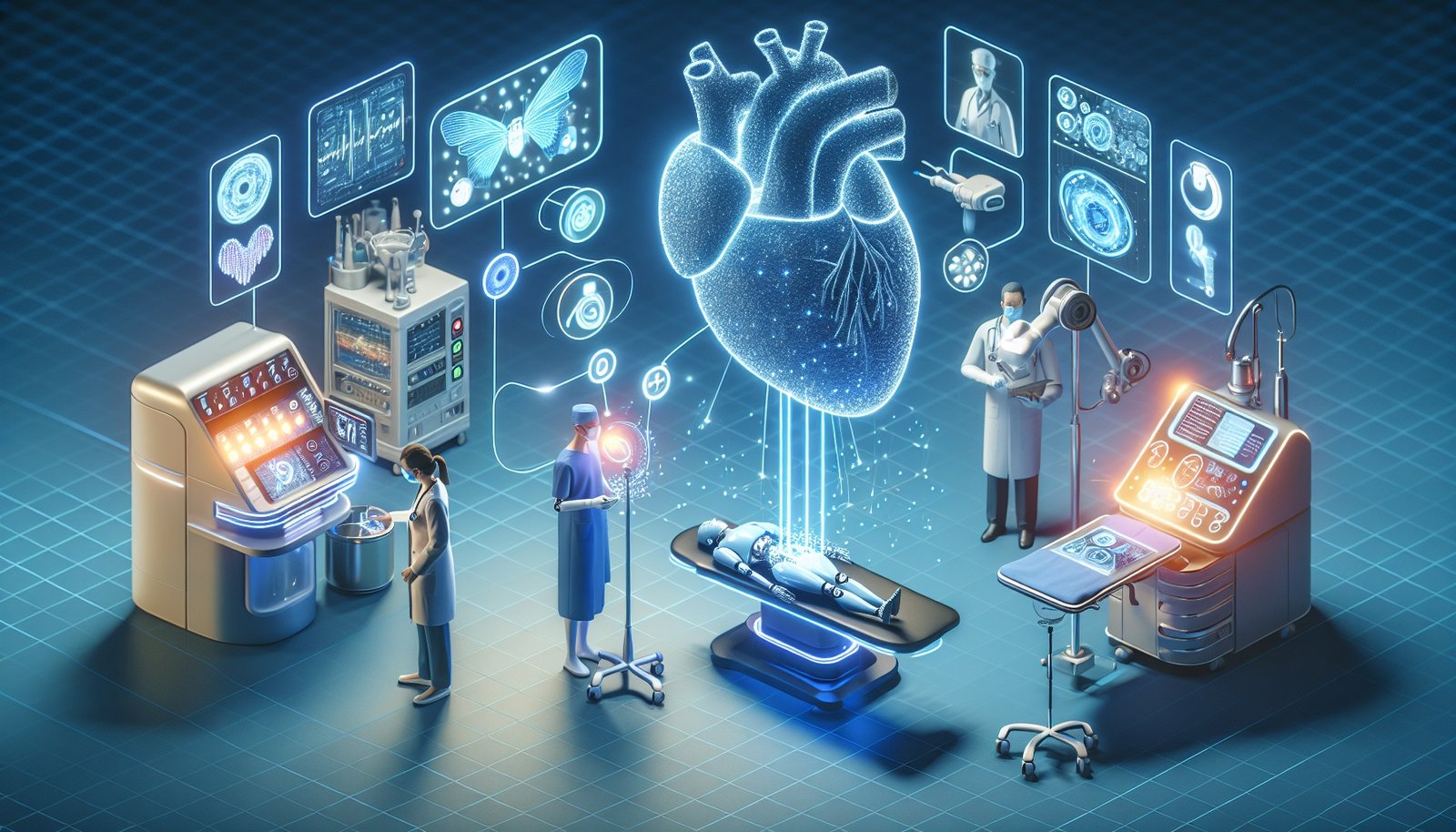
The healthcare industry is undergoing a massive digital shift, and at the center of this transformation is Artificial Intelligence (AI). From predictive diagnostics to personalized treatment plans, AI-powered IT solutions are redefining how healthcare systems operate, interact, and deliver care. Today, digital healthcare ecosystems are no longer just about storing patient records—they are intelligent, data-driven environments designed to improve outcomes, efficiency, and accessibility.
According to recent industry reports, the global AI in healthcare market was valued at $36.67 billion in 2025 and is projected to reach over $505 billion by 2033, growing at an impressive CAGR of nearly 39% . This rapid expansion highlights how critical AI has become in modern healthcare infrastructure.
The Rise of AI in Digital Healthcare
AI adoption in healthcare has accelerated dramatically in recent years. Studies show that around 79% of healthcare organizations are already using AI technologies, demonstrating widespread integration across hospitals, clinics, and health systems . Additionally, adoption rates have climbed to nearly 85% in 2025, reflecting strong confidence in AI-driven solutions .
This surge is driven by the need to handle vast amounts of medical data, reduce operational costs, and improve patient outcomes. AI-powered systems can process and analyze complex datasets far more efficiently than traditional IT systems, enabling faster and more accurate decision-making.
Key Ways AI-Powered IT Solutions Are Transforming Healthcare
1: Intelligent Diagnostics and Early Disease Detection
AI algorithms are revolutionizing diagnostics by analyzing medical images, lab results, and patient histories. In fact, AI-generated medical reports have shown accuracy rates of over 87%, surpassing traditional methods in some cases .
This capability allows healthcare providers to detect diseases like cancer, cardiovascular conditions, and neurological disorders at earlier stages, significantly improving survival rates and treatment outcomes.
2: Personalized Treatment and Precision Medicine
AI enables healthcare providers to deliver highly personalized care by analyzing genetic data, lifestyle factors, and medical history. This approach, often referred to as precision medicine, ensures that treatments are tailored to individual patients rather than relying on generalized protocols.
AI systems continuously learn from patient data, helping doctors refine treatment plans in real time. This leads to better patient engagement and improved recovery rates.
3: Automation of Administrative Processes
One of the biggest challenges in healthcare is administrative burden. AI-powered IT solutions automate tasks such as appointment scheduling, billing, claims processing, and medical documentation.
This not only reduces operational costs but also frees up healthcare professionals to focus more on patient care. Reports indicate that organizations using AI often achieve a return of $3.20 for every $1 invested, showcasing its financial impact .
4: Predictive Analytics for Proactive Care
Predictive analytics is transforming healthcare from reactive to proactive. AI models analyze historical and real-time data to predict potential health risks, hospital readmissions, and disease outbreaks.
For example, AI can identify patients at risk of chronic conditions and recommend preventive measures, reducing the overall burden on healthcare systems.
5: Remote Monitoring and Telehealth Integration
AI-powered applications are enhancing telehealth services by enabling remote patient monitoring through wearable devices and mobile apps. These systems track vital signs, detect anomalies, and alert healthcare providers in real time.
This is particularly beneficial for managing chronic diseases and improving access to healthcare in remote or underserved regions.
The Role of AI in Healthcare App Development
Modern digital healthcare ecosystems heavily rely on intelligent applications. A healthcare app development company plays a crucial role in integrating AI capabilities such as chatbots, virtual assistants, and predictive analytics into healthcare platforms.
These AI-powered apps can:
- Provide instant medical assistance
- Analyze symptoms using intelligent algorithms
- Offer personalized health recommendations
- Enable seamless doctor-patient communication
Similarly, a Mobile App Development Company helps build scalable and secure healthcare applications that integrate with cloud infrastructure, IoT devices, and electronic health records (EHRs), creating a connected ecosystem.
The Future of AI-Powered Healthcare Ecosystems
The future of digital healthcare lies in fully integrated, AI-driven ecosystems that combine advanced analytics, real-time monitoring, and personalized care. With the number of AI-powered medical devices surpassing 1,200 FDA-approved systems by 2025, innovation in this space is accelerating rapidly.
As AI continues to evolve, healthcare systems will become more predictive, preventive, and patient-centric. Technologies like generative AI, robotics, and genomics will further enhance the capabilities of digital healthcare platforms.
A forward-thinking healthcare app development company will play a key role in building these next-generation solutions, ensuring scalability, security, and seamless user experiences.
Conclusion
AI-powered IT solutions are fundamentally transforming digital healthcare ecosystems by improving diagnostics, enabling personalized care, automating processes, and enhancing patient engagement. With rapid adoption rates, strong ROI, and continuous innovation, AI is no longer a futuristic concept—it is a present-day necessity in healthcare.
As the industry continues to evolve, organizations that embrace AI-driven technologies will be better positioned to deliver efficient, accessible, and high-quality care. The integration of AI into healthcare is not just an upgrade—it is a complete redefinition of how healthcare systems operate in the digital age.
