
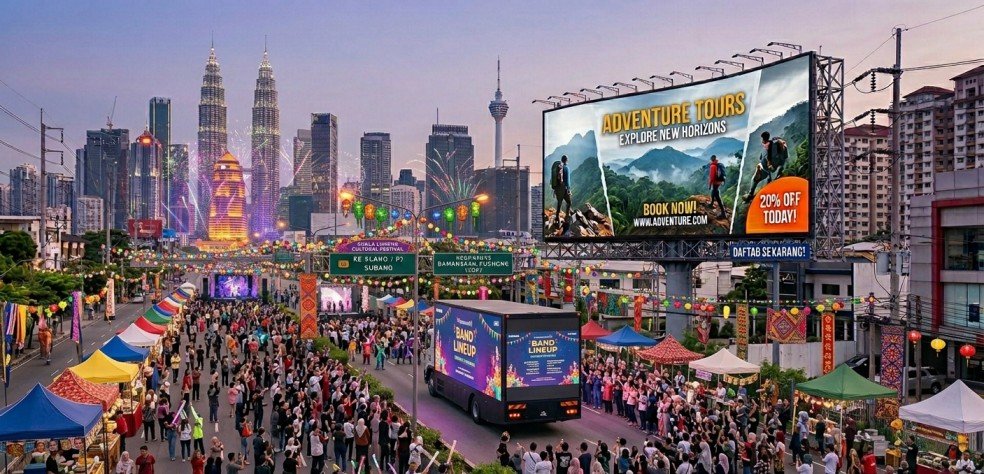
Renting a mobile LED screen truck means checking five key logistics before you book: on-site power and generator needs, AV compatibility with your content, realistic setup and teardown times, on-board technical support, and access or permits for your venue. Confirm these early to avoid costly surprises on event day.
Mobile LED screen trucks have changed the game for outdoor events, product launches and truck advertising campaigns. They roll up, unfold a high-brightness display, and turn an empty car park or festival field into a buzzing focal point. But behind that effortless arrival sits a long list of technical and logistical details—and if you miss one, your big moment can stall before it starts.
This checklist walks you through the practical questions every event planner should ask before signing a rental contract. We’ll cover power supply, audiovisual compatibility, timing, and the technical support you need on the day. Use it to brief suppliers, compare quotes, and keep your event running smoothly from load-in to load-out.
What power supply does a mobile LED screen truck need?
Power is the single biggest logistical issue with any mobile LED screen truck. The display, control systems, and any attached sound equipment all draw significant electricity, and most outdoor sites can’t supply it from a wall socket.
Most mobile LED trucks come with an on-board generator, usually a quiet, fuel-efficient diesel unit sized to run the screen for a full day. Before you book, confirm these details:
- Is a generator included? Some suppliers charge for it separately or expect you to hire one.
- What’s the fuel arrangement? Ask who covers fuel costs and refuelling during long events.
- How loud is the generator? Noise matters for ceremonies, speeches, or residential areas. Ask for the decibel rating.
- Is there a mains hook-up option? If your venue has a suitable power supply, running off mains can cut noise and fuel costs.
For multi-day or high-draw events, ask whether the supplier provides a backup generator. A single point of failure on power means a blank screen in front of your audience.
How do I check AV compatibility before the event?
A stunning screen is useless if your content won’t play on it correctly. Audiovisual compatibility is where many bookings come unstuck, so sort it out well before show day.
What file formats and resolutions does the screen support?
Ask the supplier for the screen’s native resolution and pixel pitch. Send your content in the recommended format and aspect ratio, otherwise images can stretch, blur or sit awkwardly with black bars around them. If you’re running video, confirm the supported frame rates and codecs.
How will you connect your content source?
Clarify the input options on the truck’s control system. Common connections include HDMI, SDI and USB media playback. If you plan to present live from a laptop, run a slideshow, or stream a feed, tell the supplier in advance so they can confirm the right cabling and adapters are on board.
Will you need audio, and who supplies it?
Many LED trucks include speakers, but the quality and coverage vary. For a large crowd or a music-led event, ask about wattage and whether you need a separate PA system. Confirm how audio syncs with on-screen video to avoid lip-sync issues.
How long does it take to set up a mobile LED screen truck?
Setup time affects your whole event schedule, so get firm figures rather than vague estimates. Most mobile LED trucks unfold and power up faster than a traditional staged screen, but timings still vary by truck size and site conditions.
As a rough guide:
- Arrival and positioning: 30–60 minutes, longer if site access is tight.
- Screen deployment and calibration: 30–90 minutes for the hydraulic lift, levelling and picture testing.
- Teardown: typically quicker than setup, around 30–60 minutes.
Always build in a buffer. Ask the supplier for their recommended arrival time before doors open, and factor in traffic, security checks and any venue-specific access windows. If your event runs to a tight broadcast or ceremony schedule, share that timeline so the crew can plan their calibration around it.
Will the rental include on-board technical support?
Technical support on the day separates a smooth event from a stressful one. A mobile LED screen truck is a complex piece of kit, and you don’t want to be troubleshooting a display fault while guests arrive.
When comparing suppliers, ask:
- Is an operator included? Many rentals come with a trained technician who drives, sets up, and runs the screen. Confirm whether this is part of the price.
- Does the operator stay for the full event? Some packages cover setup and teardown only, leaving you without help mid-event.
- What’s the response plan if something fails? Ask about spare parts on board, backup hardware, and how quickly issues can be fixed.
- Who handles content playback? Clarify whether the operator cues your media or whether your team controls it.
For high-stakes events—live broadcasts, major product launches, or televised moments—an experienced on-board operator is worth the extra cost.
What site access and permits should I confirm?
Even the best-equipped truck needs somewhere to park and unfold. Before booking, walk through these access points with your venue and supplier:
- Vehicle dimensions and weight: Confirm the truck fits through gates, under bridges, and onto the ground surface without sinking or causing damage.
- Unfolding footprint: The screen extends beyond the truck body. Check you have clearance overhead and to the sides.
- Permits and licences: Some councils require permits for large screens, generators or roadside positioning. Ask who’s responsible for arranging these.
- Viewing angles and sunlight: Position the screen so the audience isn’t squinting into direct sun, and so sightlines stay clear.
Sorting access early prevents the nightmare scenario of a truck that can’t reach its spot on the morning of your event.
Your pre-booking checklist at a glance
Before you confirm a mobile LED screen truck rental, tick off the essentials:
- Generator included, with fuel and noise levels confirmed
- Content format, resolution and connection types agreed
- Audio requirements clarified
- Setup, calibration and teardown times scheduled with a buffer
- On-board operator and support plan confirmed
- Site access, footprint and permits sorted
Work through this list with every supplier you approach, and you’ll compare quotes on equal terms while spotting any gaps before they become problems.
Plan ahead and your screen will shine
A mobile LED screen truck can transform an event—but only when the logistics are nailed down in advance. Power, AV compatibility, timing, support and access are the five pillars of a successful booking. Cover them in your supplier briefing, get every detail in writing, and you’ll arrive on event day confident that the screen will do exactly what you need.
Start by sending this checklist to two or three suppliers, then compare their answers side by side. The supplier who responds with clear, specific details is usually the one who’ll deliver on the day.
Frequently asked questions
How much does it cost to rent a mobile LED screen truck?
Costs vary widely based on screen size, rental duration, location and whether an operator and generator are included. Always ask for an itemised quote that breaks down the screen hire, generator, fuel, operator, and any travel or permit fees, so you can compare suppliers accurately.
How far in advance should I book a mobile LED screen truck?
Book as early as possible, ideally several weeks to a few months ahead for large or seasonal events. Popular suppliers get booked up quickly during festival and event peak seasons, and early booking gives you time to sort permits and site access.
Can a mobile LED screen be used in the rain?
Most mobile LED screen trucks use weather-resistant, high-brightness displays designed for outdoor use in varied conditions, including light rain. Confirm the screen’s IP (ingress protection) rating with your supplier and ask about their policy for extreme weather such as high winds or storms.
Do I need a permit to park a mobile LED screen truck at my event?
It depends on your location and the site. Public roads, council land and some private venues may require permits for the vehicle, the screen, or the generator. Check with your local council and venue early, and confirm with your supplier who is responsible for arranging permits.
What’s the difference between a mobile LED screen truck and a traditional staged screen?
A mobile LED screen truck arrives ready to deploy, with the display, generator and control systems built in, so setup is faster and needs less manual labour. A traditional staged screen offers flexible positioning and sizing but requires more time, equipment and crew to assemble on site.
