
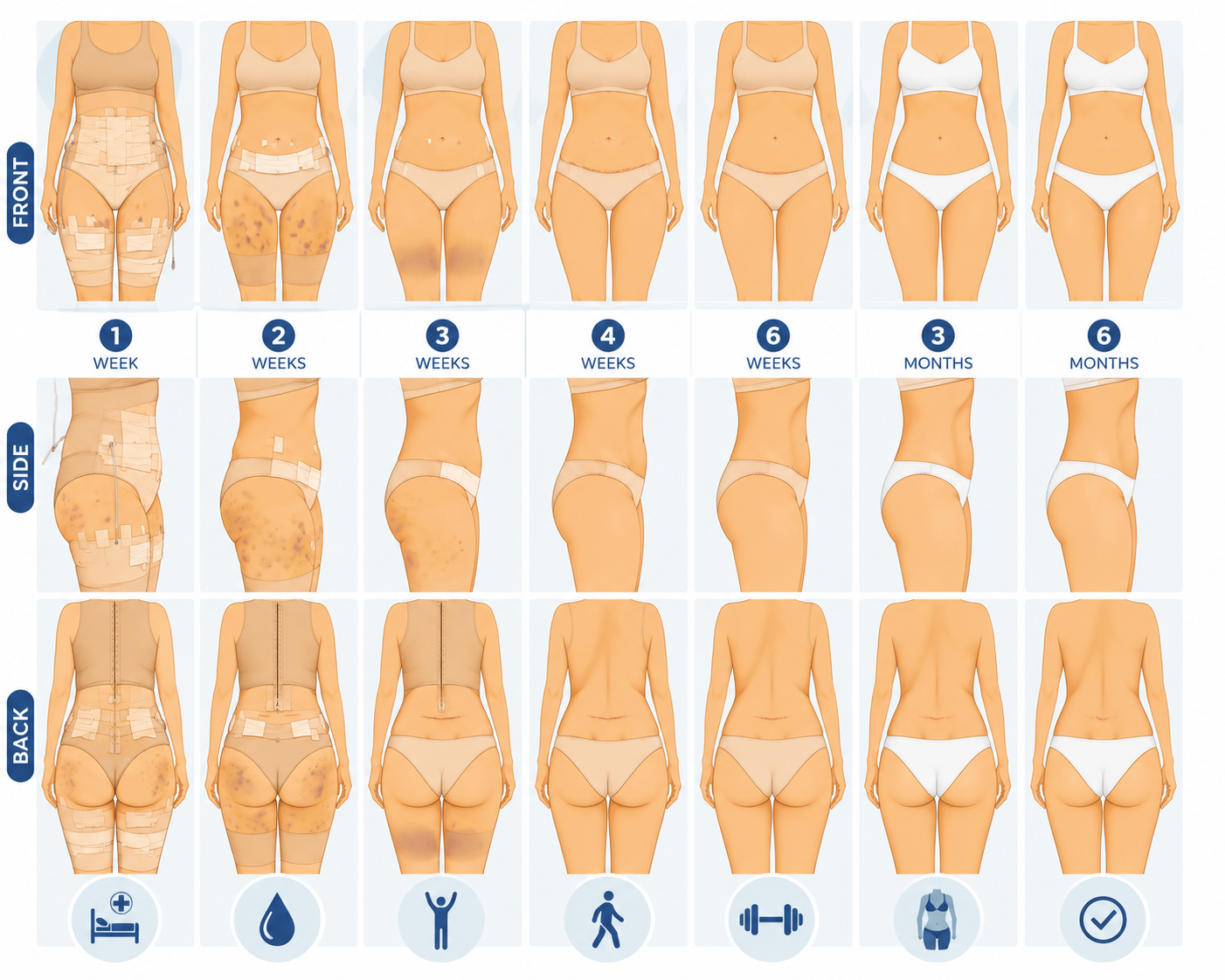
Recovering from a 360 body lift is a significant process that requires patience and preparation. Understanding what lies ahead helps you plan effectively and set realistic expectations for your healing journey.
Many patients find that knowing the timeline in advance reduces anxiety and supports better outcomes. Being well-informed before surgery means you can organise support, arrange time off work, and prepare your home for a smoother recovery.
What Is a 360 Body Lift?
A 360 body lift, also known as a belt lipectomy or torsoplasty, removes excess skin and fat from around the entire midsection. This includes the abdomen, hips, waist, buttocks, and thighs, making it one of the most comprehensive body contouring procedures available.
This surgery is commonly sought by patients who have experienced significant weight loss and are left with loose, excess skin that cannot be addressed through diet or exercise alone. The procedure reshapes the body’s overall contour in a single operation.
How Long Does Recovery Take?
Full recovery from a 360 body lift typically takes between six and eight weeks, though every patient heals at a different pace. Factors such as overall health, age, and how well post-operative instructions are followed can all significantly influence recovery duration and final results.
During this period, patients should arrange adequate help at home and avoid placing unrealistic expectations on themselves. Rest is not optional. It is a medical necessity that directly supports proper wound healing and minimises the risk of complications after surgery. Having meals prepared in advance and a comfortable resting space set up at home before your procedure date will make a genuine difference.
Week-by-Week Recovery Timeline
Week One: Hospital Stay and Initial Rest
Patients generally remain in the hospital for at least two nights following surgery. During this first week at home, rest is essential. You will have drainage tubes in place and bandaged wounds requiring careful attention and minimal movement throughout. Sleeping in a slightly reclined position is often recommended to reduce swelling and keep pressure off your incisions.
Pain and discomfort are expected during this initial stage. Your surgical team will provide appropriate pain management, and it is important to follow all wound care instructions carefully to reduce the risk of infection and support healing from the very beginning.
Week Two: Returning to Light Activity
By the second week, many patients begin to feel slightly more comfortable and mobile. Light tasks around the home become manageable, and some patients may feel ready to resume driving, provided they are no longer taking strong pain medication.
Compression garments should still be worn consistently during this stage. Swelling and bruising remain visible, which is entirely normal. Do not interpret reduced pain as a sign that you are fully healed. Your body is still in an active recovery phase that requires ongoing rest and care.
Week Three and Four: Gradual Improvement
Swelling begins to noticeably reduce during weeks three and four, and most patients feel considerably more comfortable moving around. Short, gentle walks are encouraged to support circulation, but strenuous physical activity must still be avoided completely.
A 360 lower body lift involves incisions around the entire torso, which means internal healing is ongoing even when external wounds appear to be closing well. Attending all follow-up appointments during this period is critical for monitoring your progress accurately.
Week Five and Six: Resuming Normal Routines
Most patients are cleared to return to desk-based work and light daily routines around this stage, although physical labour remains off the table. Energy levels gradually improve, and many patients notice visible improvements in their body contour, becoming more apparent.
Silicone gel may be introduced to support scar healing at this point, following assessment by your nurse. Maintaining a healthy diet and staying hydrated plays an important role in supporting the continued healing of your incisions and surrounding tissue.
Week Seven and Eight: Returning to Exercise
Light exercise, such as walking, is generally reintroduced around weeks seven and eight. More vigorous activity is still not recommended, and patients should follow their surgeon’s specific guidance before returning to any structured fitness routine. Starting with short, flat walks and slowly increasing duration over several weeks is a sensible and safe approach for most patients.
Building strength back gradually is key. Pushing too hard too soon risks disrupting healing tissue and can compromise your results. Pay close attention to how your body responds after each session, and communicate openly with your surgical team to ensure you return to full activity as safely as possible.
Conclusion: Planning Ahead Supports Better Recovery
Recovery from a 360 lower body lift is demanding, but with proper planning and realistic expectations, it is entirely manageable. Organising home help, taking adequate time off work, and following all aftercare instructions closely make a meaningful difference to your overall outcome.
Dr Andrew Broadhurst provides patients with detailed, personalised recovery guidance from the very first consultation through to the final follow-up appointment. Understanding your recovery timeline before surgery allows you to approach the process with confidence and clarity.
