
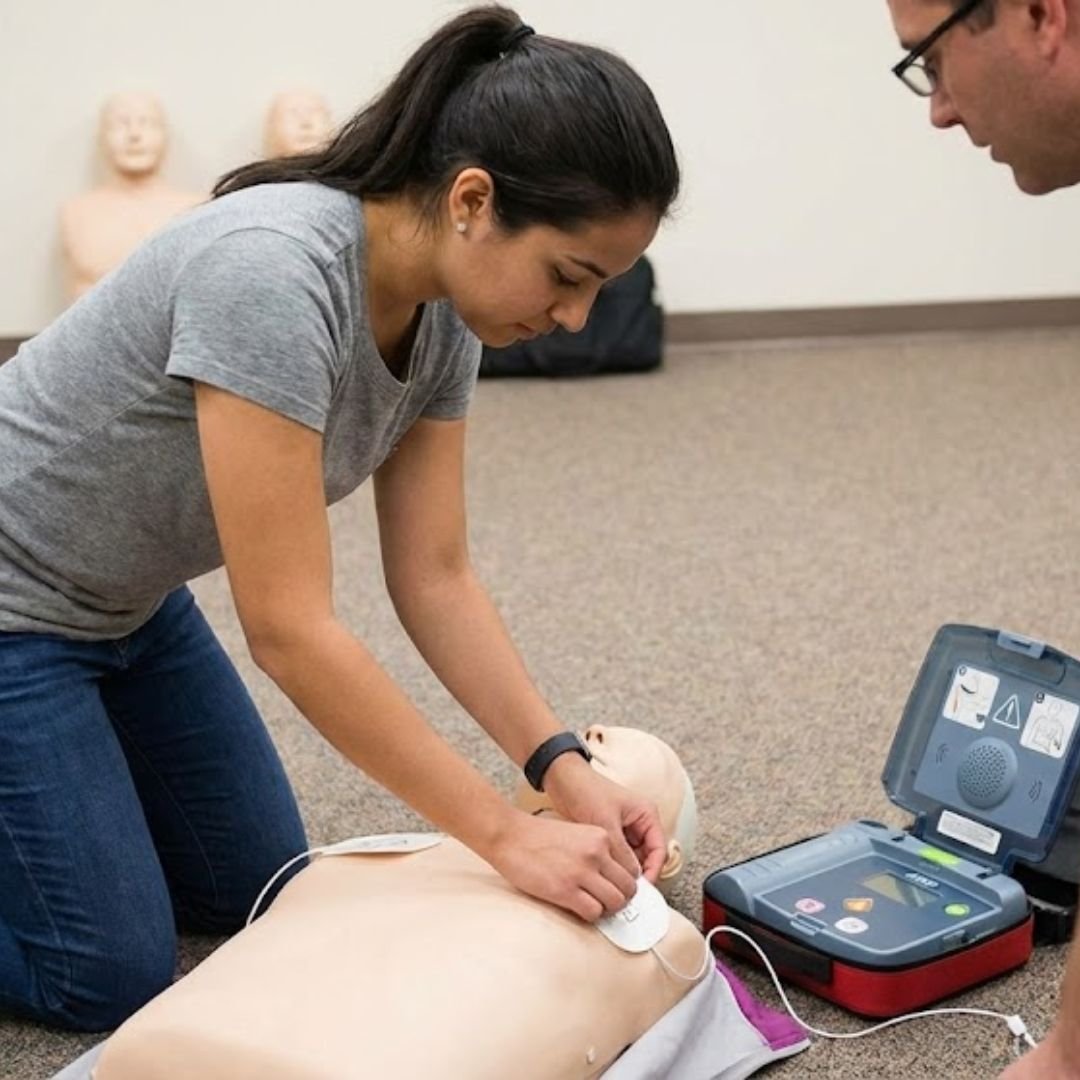
If you’ve ever looked into basic life support and first aid training, you’ll notice it’s often framed as something for healthcare workers or workplace compliance. That’s only part of the story. Most real emergencies don’t happen in controlled settings. They happen at home, on the road, in crowded places, where the first few minutes depend entirely on whoever is nearby. That’s where these skills quietly shift from “useful” to essential.
At CPR Partner, LLC, all training includes structured lessons, hands-on skills testing, and the issuance of an official AHA certification eCard after you pass.
Why These Skills Matter When It’s Not a Drill?
- Emergencies Don’t Wait for Professionals
Ambulances take time. What happens in those first minutes often decides the outcome. - You Learn to Recognize What’s Serious
Not every situation looks dramatic. Training helps you spot when something is actually life-threatening. - CPR Can Sustain Life Until Help Arrives
Even basic chest compressions can keep blood flowing to vital organs when the heart stops. - AED Use Becomes Less Intimidating
Without training, people hesitate. With it, you act, and that hesitation can cost time. - You Stay More Composed Under Pressure
Panic is natural, but practice gives you something to fall back on when things get chaotic. - You Can Help Anyone, Anywhere
A stranger, a colleague, a family member. The setting doesn’t matter once you know what to do. - It Reduces the Risk of Doing Harm
Guesswork in emergencies can make things worse. Training replaces that with a clear approach. - Small Actions Add Up
You’re not expected to solve everything. Just keeping someone stable until help arrives is often enough.
Courses Offered
1. BLS / CPR Classroom
Course Overview: This is the traditional, in-the-room training. You’reworking through compressions, AED use, and team response in real time, with an instructor who can stop you mid-cycle and fix what’s off. That immediate correction makes a difference.
Ideal For: Healthcare professionals, clinical staff, and students who need solid, hands-on repetition
Course Format: Instructor-led classroom session
Certification: American Heart Association BLS Provider eCard (valid for 2 years)
2. BLS / CPR Blended Learning
Course Overview: You handle the theory online at your own pace, then come in for the part that actually counts, the skills check. It’s efficient, especially if you already know the basics.
Ideal For: Healthcare providers trying to fit certification around unpredictable schedules
Course Format:
Part 1: Online learning
Part 2: In-person skills validation
Certification: AHA BLS Provider eCard (valid for 2 years)
3. Heartsaver First Aid, CPR, AED (Total) – Classroom
Course Overview: Broader in scope. You’re not just learning CPR, but how to respond to everyday emergencies, burns, bleeding, choking, the kind of situations that don’t wait for professionals to arrive.
Ideal For: Workplace teams, educators, and anyone responsible for others in a non-clinical setting
Course Format: Classroom-based training
Certification: AHA Heartsaver First Aid CPR AED eCard (valid for 2 years)
4. Heartsaver First Aid, CPR, AED (Total) – Blended Learning
Course Overview: Same material, just split between screen time and in-person assessment. Works well if you’d rather not sit through a full-day class.
Ideal For: People who need flexibility but still want proper certification
Course Format: Online instruction + in-person evaluation
Certification: AHA Heartsaver First Aid CPR AED eCard (valid for 2 years)
5. Pediatric First Aid, CPR, AED – Classroom
Course Overview: Focused, and for good reason. Infant and child emergencies don’t play out the same way as adult cases. This course leans into those differences: airway management, compression depth, and response timing.
Ideal For: Childcare providers, school staff, caregivers
Course Format: Instructor-led classroom training
Certification: AHA Pediatric First Aid CPR AED eCard (valid for 2 years)
6. Pediatric First Aid, CPR, AED – Blended Learning
Course Overview: Covers the same pediatric scenarios, just with the theory handled online first. The in-person session is where you prove you can actually perform the skills.
Ideal For: Those needing pediatric certification without blocking out an entire day
Course Format: Blended learning (online + in-person)
Certification: AHA Pediatric First Aid CPR AED eCard (valid for 2 years)
7. BLS / CPR SKILLS Session
Course Overview: This is strictly the hands-on portion. You’ve already done the online coursework; now it’s about demonstrating that you can perform under observation. No shortcuts here.
Ideal For: Participants who’ve completed the online BLS component
Course Format: In-person skills evaluation
Certification: AHA BLS Provider eCard issued after successful completion
8. Heartsaver First Aid, CPR, AED SKILLS Only
Course Overview: Similar idea, but for the Heartsaver track. You’re coming in to show competency, not to relearn the material.
Ideal For: Those who’ve finished the blended Heartsaver program
Course Format: In-person evaluation session
Certification: AHA Heartsaver First Aid CPR AED eCard
9. Heartsaver Pediatric First Aid, CPR, AED SKILLS Only
Course Overview: Focused evaluation on pediatric scenarios. Instructors pay close attention here, because technique matters more when you’re dealing with infants.
Ideal For: Participants completing pediatric blended learning
Course Format: In-person skills validation
Certification: AHA Pediatric First Aid CPR AED eCard
10. BLS / CPR Renewal
Course Overview: Not just a formality. Guidelines shift, techniques get refined, and this course brings you back up to standard. It’s usually quicker, but it shouldn’t feel rushed.
Ideal For: Previously certified healthcare providers who need to stay current
Course Format: Classroom or blended learning options
Certification: AHA BLS Provider Renewal eCard (valid for 2 years)
Conclusion
What it really comes down to is this: in those first few minutes, you are the response. Not perfectly, not like a paramedic, but enough to keep things from slipping further. That kind of readiness doesn’t come from instinct alone. It’s built, slowly, through practice that sticks. If you’re considering a First Aid CPR AED class in Minneapolis, look for one that treats these skills as something you might actually need on an ordinary day, because that’s usually when it happens.
