

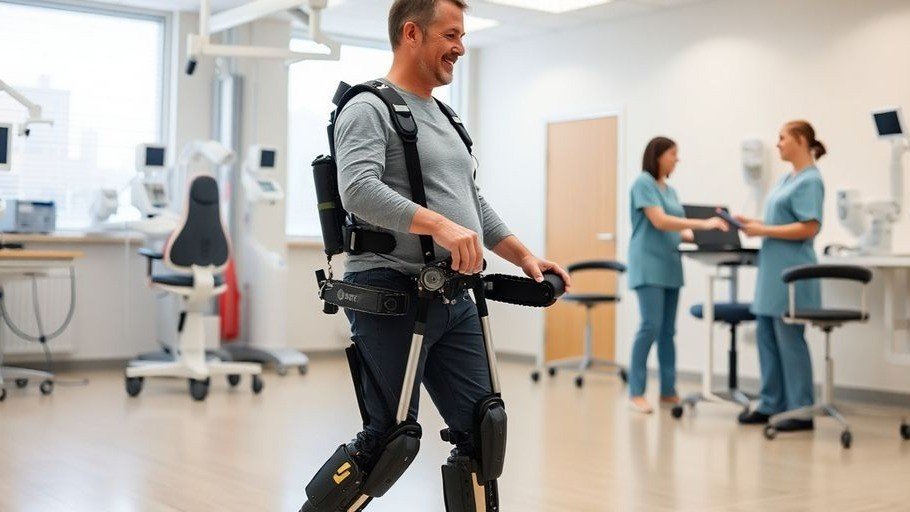
In the wake of an injury, surgery, or the onset of chronic pain, the journey back to full physical capability can feel like an uphill climb. However, for residents of Scotland’s capital, the path to recovery is paved with world-class medical expertise. Modern clinical rehabilitation—specifically high-level physiotherapy treatment in Edinburgh—has moved far beyond simple heat packs and basic stretches. Today, it is a sophisticated, data-driven process designed to restore the complex synergy between the muscular, skeletal, and nervous systems.
Whether you are recovering from a rugby injury sustained at Murrayfield, rehabilitating a post-surgical joint, or managing the wear and tear of a daily commute across the city’s historic hills, understanding the phases of rehabilitation is the first step toward reclaiming your independence.
1. The Diagnostic Phase: Beyond the Symptom
The hallmark of the top physiotherapy treatment in Edinburgh is a “root cause” diagnostic approach. Instead of merely treating the area that hurts, clinical rehabilitation begins with a comprehensive biomechanical assessment.
Physiotherapists analyze your movement patterns, identifying “compensatory behaviors.” For example, a persistent knee ache may actually be caused by hip instability or poor ankle mobility. By using video gait analysis and manual muscle testing, clinicians build a structural map of your body. This ensures that the rehabilitation plan doesn’t just provide temporary relief but permanently fixes the mechanical flaw that led to the injury in the first place. This stage often involves assessing the kinetic chain—the idea that joints and segments have an effect on one another during movement.
2. The Acute Recovery Phase: Controlling Inflammation
The initial goal of any rehabilitation program is to stabilize the injury and manage pain. In this phase, physiotherapy treatment in Edinburgh utilizes advanced modalities to accelerate the body’s natural healing processes without causing further irritation.
- Manual Therapy: Skilled joint mobilizations and soft-tissue release to reduce stiffness and restore early range of motion.
- Targeted Modalities: The use of ultrasound, interferential therapy, or shockwave therapy to stimulate blood flow and cellular repair in damaged tendons and ligaments.
- Activity Modification: Rather than total rest, which can lead to muscle atrophy and cardiovascular decline, physiotherapists prescribe “relative rest”—staying active in ways that do not stress the injured tissue.
By controlling the inflammatory response early, the clinician prevents the formation of excessive scar tissue, which can limit long-term flexibility.
3. The Functional Restoration Phase: Rebuilding the Foundation
Once pain is managed and the initial inflammation has subsided, the focus shifts to restoring range of motion and foundational strength. This is where the “clinical” part of rehabilitation becomes vital. Exercises are prescribed with surgical precision, targeting specific muscle groups to ensure the joint is properly supported.
In Edinburgh, many clinics utilize “Neuro-Muscular Re-education.” This process retrains the brain to fire the correct muscles in the correct sequence. After an injury, the brain often “shuts down” certain muscles as a protective mechanism—a phenomenon known as arthrogenic muscle inhibition. Clinical rehabilitation “switches” these muscles back on, ensuring that as you get stronger, you are also moving more efficiently.
4. The Strength and Conditioning Phase: Future-Proofing
Restoring “normal” function is rarely the end goal of professional physiotherapy treatment in Edinburgh. To prevent re-injury, the body must be made more resilient than it was before the trauma occurred. This phase involves progressive loading—gradually increasing the weight, speed, and complexity of movements to “armour” the body against future stresses.
For Edinburgh’s active population, this might involve:
- Proprioceptive Training: Balance exercises on unstable surfaces to strengthen the small stabilizer muscles in the ankles and knees.
- Plyometrics: Controlled jumping and landing drills for those returning to high-impact sports like football or running.
- Eccentric Loading: Specifically strengthening the muscle as it lengthens, which is the gold standard for treating chronic tendon issues like Achilles or Patellar tendinopathy.
By building a surplus of strength, the patient ensures that their “capacity” to handle stress is far greater than the “demands” of their daily life.
5. Integration and Return to Life
The final stage of clinical rehabilitation is the transition back to your specific lifestyle. A grandmother playing with her grandchildren needs a different “return-to-function” protocol than a marathon runner or a construction worker.
Specialists in physiotherapy treatment in Edinburgh tailor the final weeks of care to mimic the specific demands of your daily life. This “functional integration” ensures that when you are discharged, you aren’t just pain-free in the sterile environment of a clinic—you are fully capable in the real world. This might involve lifting heavy loads if you work in trade, or high-speed directional changes if you play competitive sports.
| Phase | Primary Goal | Key Techniques |
| Acute | Pain & Swelling Control | Manual therapy, Compression, Modalities |
| Sub-Acute | Range of Motion | Stretching, Joint Glides, Light Loading |
| Functional | Strength & Stability | Resistance training, Balance drills |
| Advanced | Power & Resilience | High-load lifting, Sport-specific drills |
The Strategic Advantage of Clinical Supervision
Why is professional supervision necessary for restoring full function? The human body is a master of “cheating.” If a muscle is weak or a joint is stiff, the body will automatically shift the load to another structure. This often leads to a secondary injury—for instance, a back strain caused by a limp from an ankle injury.
A clinical environment provides the objective “eye” needed to catch these micro-compensations before they become hard-wired habits. Furthermore, Edinburgh’s leading clinics provide a bridge between medical care and fitness. They offer a safe space where you can push your physical limits under the guidance of someone who understands your surgical history, bone density, or chronic pathology.
Supervised rehabilitation also provides the psychological confidence needed to move again. Fear of re-injury (kinesiophobia) is one of the biggest hurdles to full recovery. A physiotherapist helps you overcome this barrier by proving, through data and progressive success, that your body is once again capable of handling load.
Final Thought: Reclaiming Your Physical Freedom
Restoring full function is a journey of biological adaptation. It requires time, consistency, and the right expertise. By choosing physiotherapy treatment in Edinburgh that prioritizes clinical rehabilitation, you are moving beyond the “quick fix” of painkillers or temporary massages.
You are investing in a version of yourself that is stronger, more mobile, and better equipped to navigate the streets of the capital for years to come. Whether you want to summit Arthur’s Seat pain-free or simply walk to the shops without a limp, clinical rehabilitation is the most reliable vehicle to get you there. Don’t settle for “good enough.” Aim for full restoration and take back the physical freedom you deserve.
