


Tag

hair transplant before and after

Browsing

Hair transplantation has become one of the most effective and permanent solutions for hair loss. However, one common misconception is that every patient will achieve the same results. Many people compare online Hair Transplant Before and After photos and expect an identical transformation, but every hair restoration journey is unique.

Several factors, including the Norwood scale classification, hair texture, genetics, graft count, and the treatment technique used, influence the final outcome. Understanding these differences helps patients develop realistic expectations and appreciate that successful hair restoration is about achieving the best possible result for their individual condition rather than copying someone else’s transformation.

Understanding Hair Transplant Before and After Results

A hair transplant involves moving healthy hair follicles from a donor area, typically the back or sides of the scalp, to areas experiencing thinning or baldness. Although the procedure follows the same medical principles for every patient, the final appearance depends on multiple personal factors.

This is why Hair Transplant Before and After results vary from one individual to another, even when surgeries are performed by the same surgeon.
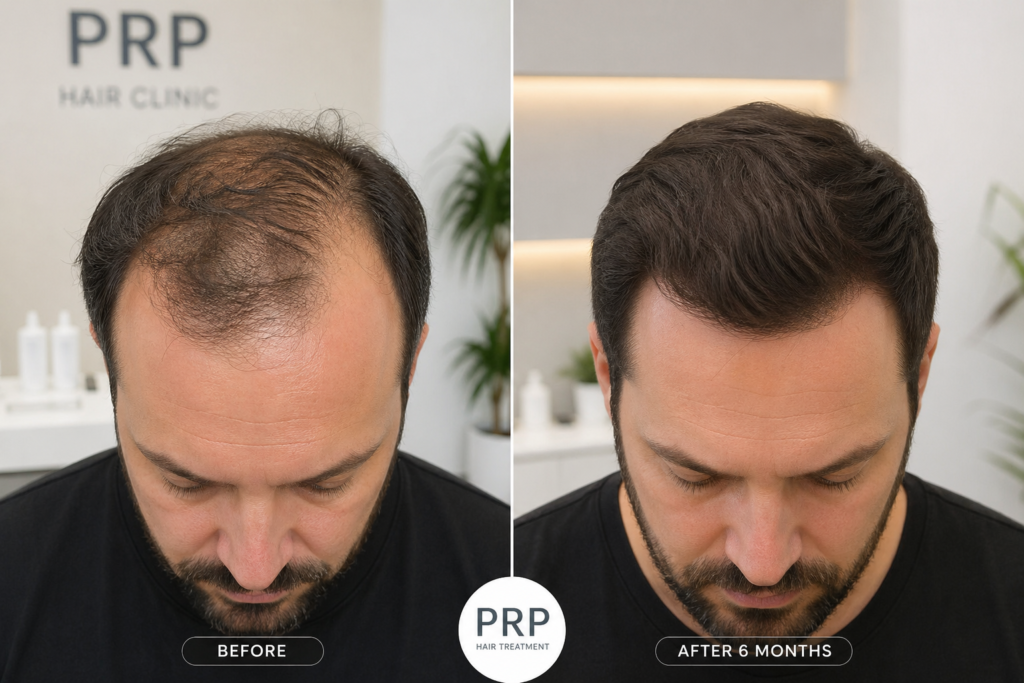
1. Norwood Scale Classification Determines the Treatment Plan

The Norwood Scale is the standard system used to classify male pattern baldness and helps surgeons determine the most appropriate treatment approach.

Norwood Stage 1–2

Patients with minimal hair loss usually require fewer grafts and can often achieve excellent density with a single procedure.

Norwood Stage 3–4

Hairline recession becomes more noticeable, requiring a moderate number of grafts to restore a natural appearance.

Norwood Stage 5–7

Advanced hair loss involves larger bald areas, making strategic graft placement and donor management essential for balanced coverage.

Because every stage requires a different treatment strategy, Hair Transplant Before and After results should always be evaluated based on the patient’s original hair loss pattern rather than comparing different cases.

2. Hair Texture Influences Density

Hair texture significantly affects how dense a transplant appears after healing.

Thick Hair

Thicker hair shafts cover more scalp area, creating a fuller appearance with fewer grafts.

Fine Hair

Fine hair may require more grafts to achieve similar visual density.

Curly or Wavy Hair

Curly hair naturally adds volume and provides better scalp coverage.

Straight Hair

Straight hair lies flatter, making the scalp slightly more visible despite successful graft growth.

These natural differences explain why two patients receiving the same number of grafts can have completely different Hair Transplant Before and After outcomes.

3. Genetics Affect Long-Term Results

Genetics play an important role in determining both hair quality and recovery.

They influence:

  • Hair thickness
  • Growth speed
  • Hair color
  • Hair density
  • Future hair loss progression
  • Healing ability

Some patients experience rapid growth within six months, while others continue improving for up to twelve months or longer.

Since genetics cannot be controlled, Hair Transplant Before and After timelines naturally differ from person to person.

4. Graft Count Makes a Significant Difference

The number of transplanted grafts directly impacts the amount of coverage that can be achieved.

Typical graft requirements include:

  • 1,000–1,500 grafts: Minor hairline correction
  • 2,000–3,000 grafts: Frontal restoration and moderate thinning
  • 3,500–5,000 grafts: Extensive baldness and crown restoration

However, more grafts do not always guarantee better results. An experienced surgeon focuses on creating natural density while preserving donor hair for the future.

Proper graft planning leads to balanced and long-lasting Hair Transplant Before and After transformations.

5. Treatment Technique: FUE vs FUT

The surgical method also affects recovery and appearance.

FUE (Follicular Unit Extraction)

  • Individual follicles are extracted one by one
  • Minimal linear scarring
  • Faster healing
  • Ideal for shorter hairstyles
  • Less invasive procedure

FUT (Follicular Unit Transplantation)

  • A strip of scalp is removed from the donor area
  • Higher graft numbers may be possible in one session
  • Leaves a linear scar
  • Suitable for patients requiring extensive restoration

Both techniques can produce excellent Hair Transplant Before and After results when performed by an experienced surgeon. The best option depends on the patient’s needs and donor availability.

6. Donor Hair Quality Matters

Every hair transplant relies on the strength and density of the donor area.

A healthy donor area provides:

  • Strong follicles
  • Better graft survival
  • Natural density
  • Long-lasting results

Patients with thick donor hair often achieve fuller coverage than those with limited donor resources.

Careful donor management also ensures that additional procedures remain possible if future hair loss occurs.

7. Age and Future Hair Loss

Age influences both treatment planning and long-term satisfaction.

Younger patients may continue losing native hair after surgery, making long-term planning essential. Surgeons often design a mature, natural hairline instead of creating an aggressively low one.

Older patients with stabilized hair loss generally achieve more predictable outcomes.

This personalized approach ensures Hair Transplant Before and After results remain natural for many years.

8. Healing and Recovery Vary

Every person’s body heals differently.

Several factors influence recovery, including:

  • Overall health
  • Nutrition
  • Lifestyle habits
  • Smoking
  • Stress levels
  • Compliance with aftercare instructions

Some patients notice early growth by the third month, while others see significant improvement after six months.

Patience is essential throughout the Hair Transplant Before and After journey.

Why Realistic Expectations Are Important

Many patients expect immediate and dramatic changes after surgery, but hair restoration is a gradual process.

Typical recovery includes:

  • Week 1–2: Healing and scab formation
  • Month 1: Temporary shock loss
  • Month 3–4: Initial new hair growth
  • Month 6: Noticeable increase in density
  • Month 9–12: Final natural-looking results

Understanding this timeline helps reduce anxiety and improves overall satisfaction.

Tips for Achieving the Best Results

To maximize your outcome:

  • Choose an experienced hair transplant surgeon.
  • Follow all post-operative instructions carefully.
  • Avoid smoking and excessive alcohol consumption.
  • Maintain a healthy, protein-rich diet.
  • Protect your scalp from direct sunlight.
  • Attend scheduled follow-up appointments.
  • Be patient and allow the natural growth cycle to progress.

Conclusion

Every Hair Transplant Before and After journey is unique because every patient has different hair characteristics, genetics, donor availability, and hair loss patterns. Factors such as the Norwood scale classification, hair texture, graft count, and the choice between FUE and FUT all contribute to the final result.

Rather than comparing your progress with someone else’s, focus on achieving the best possible outcome for your individual condition. With realistic expectations, expert surgical planning, and proper aftercare, a hair transplant can provide natural, long-lasting results that restore both your hair and your confidence.

Hair loss can significantly affect a person’s confidence and self-image. As a result, many individuals turn to hair transplantation as a long-term solution for restoring natural hair growth. While clinics often showcase impressive Hair Transplant Before and After photos, understanding what happens beyond the initial transformation is crucial. Real patient experiences reveal that successful hair transplant outcomes are not just about immediate results—they depend on how the transplanted hair performs over time.

In this article, we’ll explore how Hair Transplant Before and After results evolve over 6, 12, and 24 months and examine the factors that contribute to lasting success.

Understanding the Hair Transplant Journey

A hair transplant involves moving healthy hair follicles from a donor area, typically the back or sides of the scalp, to areas experiencing thinning or baldness. Modern techniques such as Follicular Unit Extraction (FUE) and Follicular Unit Transplantation (FUT) provide natural-looking results with minimal scarring.

However, patients should understand that hair transplant results do not appear overnight. The transformation occurs gradually, and the most impressive Hair Transplant Before and After outcomes often take up to two years to fully develop.

Hair Transplant Before and After: The First 6 Months

The first six months are often the most challenging stage for patients because visible improvements can be slow.

Month 1: Healing and Recovery

Immediately after surgery, small scabs form around the transplanted grafts. Mild redness and swelling are common and typically resolve within a few days to weeks. During this stage, patients may not notice significant cosmetic improvements.

Months 2–3: The Shedding Phase

One of the most surprising aspects of the Hair Transplant Before and After process is temporary shedding. Newly transplanted hairs often fall out, a normal phenomenon known as “shock loss.” While this can cause anxiety, the follicles remain healthy beneath the scalp.

Months 4–6: Early Growth Begins

Around the fourth month, new hairs start emerging. Initially, these hairs may appear thin, soft, or uneven. By the sixth month, many patients notice visible improvements in hairline definition and overall density.

At this stage, most patients achieve approximately 40–60% of their final results. Comparing Hair Transplant Before and After photos at six months often reveals encouraging progress, though the journey is far from complete.

Hair Transplant Before and After: The 12-Month Milestone

For many patients, the one-year mark represents a significant transformation.

Improved Density and Thickness

Between months 6 and 12, transplanted hair continues to mature. Individual strands become thicker, stronger, and more closely resemble the surrounding natural hair.

Patients frequently report increased confidence as their appearance becomes noticeably fuller and more youthful.

Natural Hairline Development

One of the most important indicators of a successful Hair Transplant Before and After outcome is a natural-looking hairline. By the 12-month mark, the transplanted follicles have typically settled into their permanent growth pattern.

Greater Styling Flexibility

At this stage, patients can generally style, cut, and manage their hair normally. Most of the transplanted follicles are actively growing, creating a seamless blend with existing hair.

Many clinics use the 12-month point for official Hair Transplant Before and After comparisons because the results are highly visible and representative of long-term success.

Hair Transplant Before and After: Results at 24 Months

Although many patients are satisfied after one year, subtle improvements often continue into the second year.

Maximum Hair Maturity

By 18–24 months, transplanted hairs typically reach their maximum thickness and maturity. The texture becomes more consistent, and density may improve further.

Long-Term Stability

A key advantage of hair transplantation is that transplanted follicles are generally resistant to the hormone responsible for pattern baldness. This means the new hair can continue growing naturally for years.

When examining Hair Transplant Before and After images at the 24-month stage, patients often notice a dramatic difference compared to their original appearance, with results appearing fully natural and integrated.

Enhanced Confidence and Satisfaction

Many long-term patients report that the emotional benefits are just as important as the cosmetic improvements. Increased self-confidence, improved social interactions, and greater satisfaction with personal appearance are commonly reported outcomes.

Factors That Influence Long-Term Hair Transplant Success

Not every patient achieves identical results. Several factors play a major role in determining how successful a transplant will be over time.

1. Surgeon Expertise

The skill and experience of the surgeon significantly impact the final outcome. Proper graft placement, angle, density, and hairline design are essential for creating natural-looking Hair Transplant Before and After results.

2. Donor Hair Quality

The strength, thickness, and density of donor hair directly influence the transplant’s success. Patients with healthy donor areas often achieve fuller and more consistent coverage.

3. Age and Hair Loss Progression

Younger patients may continue experiencing hair loss in untreated areas. A comprehensive treatment plan helps ensure long-term balance and natural-looking results.

4. Post-Procedure Care

Following post-operative instructions is critical. Proper scalp care, avoiding excessive sun exposure, and attending follow-up appointments can improve graft survival and healing.

5. Overall Health and Lifestyle

Factors such as smoking, poor nutrition, stress, and certain medical conditions may affect hair growth and recovery. Maintaining a healthy lifestyle supports optimal transplant outcomes.

Setting Realistic Expectations

One of the most important lessons from real patient experiences is the importance of patience. Many people expect immediate results, but successful Hair Transplant Before and After transformations require time.

Understanding the natural growth cycle helps patients appreciate each stage of progress. Consistent improvements over months ultimately lead to the most satisfying long-term outcomes.

Patients should also recognize that hair transplantation redistributes existing hair rather than creating new follicles. Therefore, realistic expectations and proper planning are essential for achieving a balanced and natural appearance.

Conclusion

Real-world Hair Transplant Before and After results demonstrate that hair transplantation can provide remarkable and lasting improvements when performed correctly. While the first six months focus on healing and early growth, the most significant changes typically occur by the 12-month mark, with final refinements continuing through 24 months.

Long-term success depends on multiple factors, including surgeon expertise, donor hair quality, post-operative care, and individual health. By understanding the timeline and maintaining realistic expectations, patients can better appreciate the journey toward fuller, natural-looking hair and enjoy the confidence that comes with a successful hair transplant.